英語ときどき知財の弁理士ブログ

アフィリエイトを掲載しています。生成AIを推敲や英訳等に利用しています

弁理士の学び直し:技術・法律・語学のトライアングルと、今更の電気・化学基礎

弁理士が直面する「技術」の壁

新年から新しい技術分野を扱うことになりそうなので、高校から大学の基礎程度の教科書を使い、慌てて電気関係の勉強をしている。この一息ついたら、化学系の勉強もしたいと思っている。

私が所属する特許の世界では、技術・法律・語学(英語)の力が不可欠だ。

法律については弁理士資格を持っているため、業界内でもそれなりの詳しさを持っている自負がある。英語に関しても、TOEICでは935点を取得しており、業界内ではまずまずのレベルにあると考えている。

一方、最も肝ともいえる技術分野の知識に対しては、正直あまり自信がないのが現状だ。大学入学以降にもっと勉強しておけばよかったと、今更ながら後悔の念に駆られている。

社会人になってからの勉強の功罪

社会人になってから学ぶことは、生活に張りが出て楽しいという利点がある一方で、絶対的な時間が足りないという点で不利である。

学生の頃の勉強は社会に出たら役に立たない、なんて言われることがある。しかし、弁理士という職業に限って言えば、それは完全に嘘であると断言できる。

(広告)

本屋で高校生向けの参考書も購入してみた。安価で基礎的な情報が網羅できるのでありがたい。

にほんブログ村 士業ブログ 弁理士へ にほんブログ村 士業ブログ 弁理士へ


English Translation: The Patent Attorney's Education Reboot: The Triad of Tech, Law, and Language

I anticipate delving into a completely new technical domain starting this year, which has necessitated a hasty immersion in fundamental electrical engineering concepts, using textbooks ranging from high school to undergraduate level. Once I catch my breath, I intend to undertake a similar intensive study of chemical principles.

The patent world, which is my professional milieu, mandates a formidable triad of technical expertise, legal acumen, and linguistic (English) proficiency.

My status as a Patent Attorney affords me a commendable command of the law, placing me at a respectable level within the profession. Furthermore, my TOEIC score of 935 suggests that my English capability is also quite adequate among my peers.

Conversely, I must candidly confess a distinct lack of self-assurance regarding my knowledge in the technical disciplines—the very crux of the profession. I am now beset by the belated regret that I did not pursue more rigorous study during and after my university matriculation.

Learning as a professional provides a rewarding sense of vitality and purpose, yet it is significantly handicapped by the absolute scarcity of time.

There is a common adage that academic study is inconsequential in professional life. However, I can unambiguously affirm that, specifically for a Patent Attorney, this claim is entirely specious.


📚 難しい語彙の英語学習者向け解説

  • delving into (動詞句): ~を深く掘り下げる、詳しく研究する。
  • technical domain (名詞句): 技術分野、専門領域。
  • necessitated (動詞): ~を必要とさせた、余儀なくさせた。
  • hasty immersion (名詞句): 急いで深く入り込むこと、慌ただしい集中学習。
  • fundamental concepts (名詞句): 基本的な考え方、基礎概念。
  • undergraduate level (名詞句): 大学学部レベル。
  • intend to undertake (動詞句): ~に着手するつもりである、~を行う意図がある。
  • intensive study (名詞句): 集中学習、集中的な研究。
  • professional milieu (名詞句): 専門的な環境、職業的な周囲(状況)。
  • mandates (動詞): ~を義務付ける、~を要求する。
  • formidable triad (名詞句): 恐るべき三つ組、強力な三要素。
  • technical expertise (名詞句): 技術的な専門知識、技術力。
  • legal acumen (名詞句): 法的な洞察力、法律に関する鋭い判断力。
  • linguistic proficiency (名詞句): 言語の熟練度、言語能力。
  • affords me (動詞句): (私に)~を与える、~を提供する。
  • commendable command (名詞句): 賞賛に値する習熟度、立派な運用能力。
  • respectable level (名詞句): かなり良いレベル、世間的に認められる水準。
  • adequate (形容詞): 十分な、適切な、申し分のない。
  • conversely (副詞): 対照的に、逆に。
  • candidly confess (動詞句): 率直に告白する、正直に認める。
  • distinct lack (名詞句): 明確な不足、はっきりとした欠如。
  • self-assurance (名詞): 自信、自己確信。
  • crux (名詞): 最も重要な点、核心、急所。
  • beset by (動詞句): ~に悩まされる、~に取り囲まれる。
  • belated regret (名詞句): 遅ればせながらの後悔、今になっての後悔。
  • rigorous study (名詞句): 厳密な研究、徹底した勉強。
  • matriculation (名詞): 大学への入学、入学手続き。
  • sense of vitality (名詞句): 活気のある感覚、生命力。
  • handicapped by (動詞句): ~によって不利にされている、障害がある。
  • scarcity (名詞): 不足、欠乏。
  • common adage (名詞句): 一般的な格言、よく言われることわざ。
  • inconsequential (形容詞): 結果として重要でない、取るに足らない。
  • unambiguously affirm (動詞句): 曖昧さなく断言する、明確に肯定する。
  • specious (形容詞): もっともらしく見えるが実は誤った、見かけ倒しの。

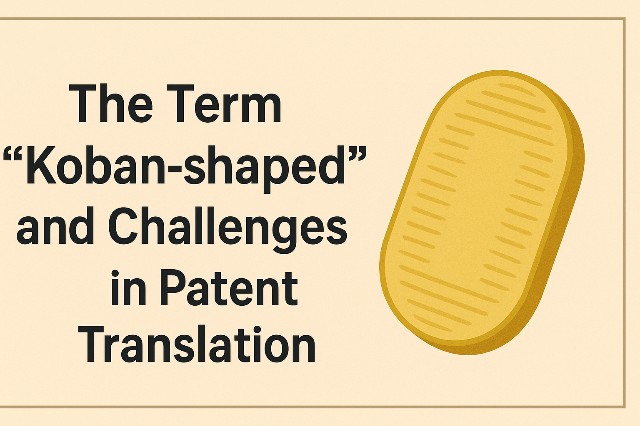
小判状という表現と特許翻訳における課題

小判状との出会い

他社の公開特許公報を読んでいて「小判状(こばんじょう)」という言葉を見つけた。私が主に扱う機械系の分野では、形状をよく知られた物に例えて表現することが多い。江戸時代に使われていた貨幣である小判は、日本人にとって馴染み深いものであり、形状の比喩として用いると理解しやすいのは確かである。

翻訳における難しさ

しかし問題は、そのような特許出願を翻訳して海外出願を行う場合である。日本人には「小判状」で通じても、他国では全く理解されない可能性が高い。海外出願の可能性を考えるならば、翻訳の便宜を考慮し、小判状という表現は避けるのが無難であろう。

代替表現の模索

では、小判状をどのように表現すればよいのか。AIとディスカッションしながら考えてみた。

幾何学的にかみ砕いて説明するならば、
「両短辺を外側に凸の曲線(あるいは外側に凸の半円)で置き換えた長方形状」
という表現が考えられる。

他のアイデアとして、AIからは「錠剤状」や「カプセル状」という案も出された。確かに分かりやすい表現であり、AIの知見に感心させられた。ただし真円状の錠剤やカプセルも存在するため、小判のような細長い形を正確に伝えるには不十分な面もある。とはいえ、小判の中にも真円形に近いものが存在したのかもしれず、あまりイチャモンをつけるのも野暮なのかもしれない。

また、「スタジアム形状」や「オブラウンド(obround)」という表現も有用である。前者は非常にわかりやすく、後者は私にとって初耳であったが、実際に使用例が多い言葉のようである。

他の日本独自の形状表現

小判状以外にも、日本語に特有で翻訳が難しい形状表現は多い。私が見聞きしたものと、その翻訳の私案をいくつか挙げておく。

  • おにぎり状 → 角を丸くした三角形状
  • 富士山状 → 円錐状、または円錐台状
  • コの字状 → Channel(水路)状

弁理士の立場と私の考え

特許出願の原稿を作成する弁理士の中には、日本の出願を起案する際には、あくまで日本語として明確な表現を選ぶことに心を砕くべきであり、翻訳を意識するのは邪道であるとする意見もある。翻訳の工夫は翻訳者の職分であって、弁理士の責務ではないと公言する人もいる。

確かにそのようなこだわりも理解できるが、実際には日本出願の目的は日本国内の権利取得にとどまらず、海外出願の基礎とすることも含まれる。少なくとも私の考えでは、翻訳の後工程にも配慮することは、弁理士の職責の一部である。


English Translation

The Term “Koban-shaped” and Challenges in Patent Translation

Encountering the Term

While reading other companies’ published patent applications, I came across the term “koban-shaped.” In the field of mechanical engineering, which I mainly deal with, it is common to describe a shape by comparing it to something well-known. The koban, a coin used during the Edo period, is familiar to Japanese people, so using it as a metaphor for a shape is certainly easy to understand.

Difficulties in Translation

The difficulty arises when such patent applications need to be translated and filed abroad. Although “koban-shaped” makes sense to Japanese people, it is unlikely to be understood in other countries. Considering the possibility of overseas filings, it would be safer to avoid using “koban-shaped” for the sake of translation convenience.

Exploring Alternative Expressions

So how should one describe “koban-shaped”? I discussed this question with AI.

If broken down geometrically, one could describe it as:
“A rectangular shape with both short sides replaced by outwardly convex curves (or outwardly convex semicircles).”

Another idea suggested by AI was “tablet-shaped” or “capsule-shaped.” These are indeed easy-to-understand expressions, and I was impressed by the AI’s insight. However, since there are also perfectly round tablets and capsules, they may not accurately convey the elongated form of a koban. That said, there might also have been kobans that were close to a perfectly circular shape, so it may be somewhat nitpicky or inelegant to complain too much about such terminology.

In addition, I learned expressions like “stadium-shaped” and “obround.” The former is very straightforward, while the latter was new to me, but it seems to be a commonly used term.

Other Japan-specific Shape Expressions

Besides “koban-shaped,” there are many Japanese shape expressions that are difficult to translate. Here are some I have encountered, along with my proposed translations:

  • Onigiri-shaped → Rounded triangular shape
  • Mt. Fuji-shaped → Conical shape, or truncated cone shape
  • Ko-no-ji-shaped → Channel-shaped

Patent Attorneys’ Perspectives and My View

Some patent attorneys argue that when drafting Japanese applications, one should focus solely on using precise Japanese expressions, and that considering translation convenience is misguided. They insist that translation choices are the responsibility of translators, not attorneys.

While I understand such a stance, in reality, the purpose of Japanese filings is not only to secure rights domestically but also to serve as the basis for overseas applications. At least in my view, paying attention to the later translation process is also part of a patent attorney’s professional responsibility.


Vocabulary Explanations (for Japanese readers)

  • outwardly convex: 外側に凸の、外に向かってふくらんだ曲線を指す。
  • semicircle: 半円。数学的な幾何用語。
  • tablet-shaped: 錠剤のような形状を意味する。薬の丸薬をイメージした表現。
  • capsule-shaped: カプセルのような形状を意味する。医薬品カプセルの形に由来。
  • stadium-shaped: 短辺を半円にした長方形を意味する。競技場の形に由来。
  • obround: 工業分野でよく使われる用語で、長円に近い形状を意味する。oval よりも「両端が丸い長方形」に近いニュアンス。
  • truncated cone: 円錐台。富士山のように上が平らに切られた円錐を指す。
  • channel-shaped: 水路や溝の断面に似た形を指す。建築や工学でよく用いられる表現。
  • nitpicky: 揚げ足を取るように細かいことを気にする、というニュアンス。日本語の「イチャモンをつける」に近い。
  • inelegant: 優雅さに欠ける、または洗練されていない、という意味。ここでは「野暮」に近いニュアンスで使用。

弁護士と弁理士の「弁」の意味の違いと商標の落とし穴

弁護士の「弁」と弁理士の「弁」は意味が違う 阿辻哲次 - 日本経済新聞

弁護士の「弁」と弁理士の「弁」は意味が違う、という阿辻哲次さんの記事である。弁理士が豆知識として話題のネタにするような話が日経新聞の記事になっているのが少し可笑しい。

ちなみに肝心の記事は純粋に漢字の話なので、残念ながら我々弁理士の仕事について触れてくれているわけではない。

「弁護士」と「弁理士」の漢字の違い

記事によると、弁護士と弁理士のそれぞれの「弁」の違いは以下の通りである。

弁護士(べんごし)

本来の字は「辯」である。

《辛》の間が《言》になっていて、「言葉で説いて明らかにする」「議論する」という意味である。

職業の性質(法律を言葉で説明・主張すること)に合った漢字である。

弁理士(べんりし)

本来の字は「辨」である。

《辛》の間が《刀》になっていて、「切り分ける・区別する」という意味である。

専門的知識で物事を区別・判断することを表している。

私は、弁理を「理を弁える(ことわりをわきまえる)」という意味だと聞いた記憶がある。格好良いとは思うが、弁護士と誤認されやすいのがちょっと困った面でもある。

商標登録における商品区分の難しさ

上で弁理士について触れたので、今回は他にも知財の話題について触れようと思う。

「薬用育毛剤」は「薬剤」か「化粧品」か? | Brand on Marks

この中村先生のブログ記事では以下の事例が紹介されている。

商標「リグロウ」をめぐり、商標権者であるハーバー研究所は指定商品である「薬剤(第5類)」に相当する「薬用育毛剤医薬部外品)」に商標を使用していたと主張したが、特許庁は、この薬用育毛剤を「薬剤(第5類)」ではなく「化粧品(第3類)」に属する商品と判断した結果、不使用取消審判で商標権が取り消された。

商品・サービス指定の複雑さ

商標業務に触れたことがないので、正直勝手が分からず断言はできないのだが、商標は適切な商品やサービスを指定するのが難しく感じる。

基本的なことだが、商品やサービスに関する名称やロゴなどの商標を特許庁に登録する上では、商標を使用する商品やサービスを指定する必要があり、当然、申請書類(出願書類)にも記載する必要がある。

さらに、好き勝手に指定する商品やサービスを記載するわけにはいかず、それらを国際分類に従って適切な区分に設定しなければならない。

新種の製品等であれば、どの区分に属するか不明確なものもあるだろうし、上で書いたように、薬剤と化粧品のような複数の区分のどれに属するかグレーなものもあると思われる。

適切な区分設定の重要性

適切な区分に従って商品やサービスを指定しておかないと、登録された商品等に商標を使用していないとみなされて登録が取り消されてしまったり、実際に商標を使用している商品等に実は権利が生じていなかった、という恐れもある。

比較的、商標登録出願は代理人に手続き代理を委託せず、自身でしてしまう方が多いのだが、弁理士である私が不安に思えるような手続きを、知識がない人が適切にできているのか、という懸念は拭えない。

弁理士の専門性の違い

ちなみに、弁理士でも得意な手続きは人によって違うので、手続き依頼するときは注意した方が良いかもしれない。例えると、肌荒れの相談をするのに、皮膚科ではなく眼科に行くようなことになりかねない。弁理士は医師と同じで免許を持っていれば法律上規定された業務ができるが、ある程度専門性が分かれているのである。

もちろん、ベンチャー企業のIT系の特許のみを扱う弁理士のように、限られた分野に特化した専門医のような先生もいれば、特許、商標、著作権特許庁への手続きから契約書、警告書への対応、調査業務まで、相談を受けた業務をまんべんなく扱う街のかかりつけ医のような先生もいらっしゃるはずである。正直、弁理士は医師ほどははっきりと取り扱い分野が分かりにくいと思う。

にほんブログ村 士業ブログへ にほんブログ村 士業ブログ 弁理士へ

にほんブログ村 士業ブログへ にほんブログ村 士業ブログ 弁理士へ


The Different Meanings of "Ben" in Lawyers and Patent Attorneys

弁護士の「弁」と弁理士の「弁」は意味が違う 阿辻哲次 - 日本経済新聞

This is an article by Tetsuji Atsuji about how the "ben" (弁) in lawyers and patent attorneys has different meanings. It's slightly amusing that what patent attorneys typically use as trivia in conversations has become a Nikkei newspaper article.

Incidentally, the main article is purely about Chinese characters, so unfortunately it doesn't touch upon the actual work of us patent attorneys.

The Difference in Chinese Characters Between "Lawyer" and "Patent Attorney"

According to the article, the differences in the "ben" characters for lawyers and patent attorneys are as follows:

Lawyer (bengoshi)

The original character is "辯."

Between the "辛" parts is "言" (words), meaning "to clarify through words" or "to argue."

This character befits the nature of the profession (explaining and asserting legal matters through words).

Patent Attorney (benrishi)

The original character is "辨."

Between the "辛" parts is "刀" (sword/blade), meaning "to cut apart or distinguish."

This represents the discernment and judgment of matters through specialized knowledge.

I recall hearing that "benri" means "to discern reason" (to understand principles). While I think it sounds cool, the fact that it's easily mistaken for lawyers is somewhat troublesome.

The Difficulty of Product Classification in Trademark Registration

Since I mentioned patent attorneys above, I'd like to touch on other intellectual property topics this time.

「薬用育毛剤」は「薬剤」か「化粧品」か? | Brand on Marks

This blog article by Patent Attorney Nakamura introduces the following case:

Regarding the trademark "Regrow," trademark holder Harbor Research Institute claimed they used the trademark on "medicinal hair growth agent (quasi-drug)" corresponding to their designated goods "pharmaceutical preparations (Class 5)." However, the Japan Patent Office determined that this medicinal hair growth agent belonged to "cosmetics (Class 3)" rather than "pharmaceutical preparations (Class 5)," resulting in the cancellation of the trademark through non-use cancellation proceedings.

The Complexity of Goods and Services Designation

Having no experience with trademark work, I honestly don't understand the ins and outs and cannot make definitive statements, but designating appropriate goods and services for trademarks seems difficult.

Fundamentally, when registering trademarks such as names or logos for goods and services with the Japan Patent Office, it's necessary to specify the goods and services where the trademark will be used, and naturally, these must be written in the application documents.

Furthermore, you cannot arbitrarily list designated goods and services; they must be properly set according to international classification into appropriate classes.

For novel products, it may be unclear which class they belong to, and as mentioned above, there are likely gray areas regarding whether something belongs to pharmaceuticals or cosmetics among multiple classes.

The Importance of Proper Class Setting

If goods and services are not designated according to proper classifications, there's a risk that the registration could be cancelled due to being deemed as not using the trademark on registered goods, or that rights may not actually exist for goods where the trademark is actually being used.

Relatively speaking, many people file trademark registration applications themselves without delegating procedural representation to agents, but I cannot shake my concerns about whether people without knowledge can properly handle procedures that even I, as a patent attorney, find worrisome.

Differences in Patent Attorney Specializations

Incidentally, even among patent attorneys, areas of expertise differ from person to person, so it might be good to be careful when requesting procedural services. To use an analogy, it would be like going to an ophthalmologist instead of a dermatologist for skin problems. Like doctors, patent attorneys can legally perform stipulated duties if they have a license, but specializations are somewhat divided.

Of course, there are patent attorneys like specialists who focus only on venture company IT patents in limited fields, and there should also be practitioners like neighborhood family doctors who handle a wide range of consultations including patents, trademarks, copyright, Patent Office procedures, contracts, warning letters, and searching work. Honestly, I think patent attorneys' areas of practice are less clearly defined than those of doctors.


難しい語彙の解説

  • amusing: 面白い、可笑しい - 軽く笑えるような状況を表す
  • trivia: 豆知識、雑学 - 興味深いが重要でない知識や情報
  • incidentally: ちなみに、ところで - 話題を変える際の接続詞
  • befits: ふさわしい、適している - その状況や性質に合っている
  • asserting: 主張する - 自分の意見や権利を強く述べること
  • distinguish: 区別する、識別する - 違いを認識して分ける
  • discernment: 識別力、判断力 - 物事を正しく見分ける能力
  • specialized: 専門的な - 特定の分野に特化した
  • mistaken: 間違えられる - 誤解や混同される
  • troublesome: 困った、面倒な - 問題や不便を引き起こす
  • classification: 分類 - 種類や性質によって分けること
  • agent: 薬剤、代理人 - この文脈では薬品を指す
  • designated: 指定された - 特定の目的で選ばれた
  • preparations: 製剤 - 薬品として調製されたもの
  • cancellation: 取り消し - 権利や決定を無効にすること
  • non-use: 不使用 - 使用していないこと
  • proceedings: 手続き、審判 - 法的な手続きや審理
  • designation: 指定 - 特定の目的や用途を定めること
  • ins and outs: 詳細、勝手 - 物事の詳しい事情や仕組み
  • definitive: 断定的な - 確実で最終的な
  • fundamentally: 基本的に - 根本的に、本質的に
  • specify: 明記する、特定する - 詳しく定める
  • international classification: 国際分類 - 国際的に統一された分類体系
  • classifications: 分類 - カテゴリー分け
  • delegating: 委託する、代理させる - 他人に権限や責任を移す
  • specializations: 専門分野 - 特化した領域や技能
  • incidentally: ちなみに - 付け加えの情報を導入する語
  • expertise: 専門知識、技能 - 特定分野での高度な知識や技術
  • analogy: 例え、類推 - 似た状況を引用して説明すること
  • ophthalmologist: 眼科医 - 目の病気を専門とする医師
  • dermatologist: 皮膚科医 - 皮膚の病気を専門とする医師
  • stipulated: 規定された - 法律や規則で定められた
  • specialists: 専門医、専門家 - 特定分野の専門知識を持つ人
  • consultations: 相談 - 専門家に意見を求めること
  • searching: 調査の - 情報や資料を探し求める活動に関する

AI翻訳に対する感想

眼科医、皮膚科医のように医師の区分を表す英単語は難しい。英単語帳でもよく出てくるのだが、正確に覚えるのはあきらめ気味。自分で話すときはアイズドクターとか、スキンドクターとかで通じるのではないか、と正直思っていて、それで良いかもしれない。

開放特許からパンの袋留めまで:2025年夏の知財トピックス雑感

知財に触れる弁理士として、最近気になった知財関連の話題について、他の知財関係者のブログ等を参照しつつ思ったことをツラツラ書いてみたい。

信用金庫による開放特許マッチングイベント - 法目的に沿った好ましい取り組み

長野信用金庫、川崎信金などと知財活用のマッチングイベント - 日本経済新聞

長野信用金庫川崎信用金庫尼崎信用金庫が26日、知的財産活用をテーマにオンラインマッチングイベントを開催したというニュース。ロート製薬など2社の開放特許を紹介し、参加企業の特許活用による新商品開発を促進するという。

特許法は産業を振興することを法目的としている。大企業が使わなくなった特許を活用して、地元企業が新しいビジネスを起こせるようにサポートする活動は、まさに法目的に沿った活動のように思われる。自分も死ぬまでに一度はこのような仕事に携わってみたい。

開放特許を使ったビジネスとして、最近最もホットなのは、イトーキの特許を使った「立ったまま寝る仮眠ボックスgiraffenap」だろう。職場で立ったまま休む点が妙にディストピア感があって変な盛り上がり方をしたこともあったが、なかなか面白い製品だと思う。

余談として、大企業の開放特許を地元企業に紹介する取り組みは川崎市が先進的で「川崎モデル」とも呼ばれている。元の記事に川崎信金の言及があったが、もしかすると川崎市の活動で経験を積んでいるのかもしれない。

ツラツラ書いたが、giraffenapや川崎モデルについては以下のブログでも詳しく紹介されていた。

「開放特許マッチングビジネス」ってなに?職場で立ったまま寝られる仮眠ボックスの事例は劇場型プロモーションではないのか?|前川知的財産事務所

トランプ政権のハーバード大学への特許接収脅迫 - バイドール法の威力

トランプ政権、特許法通じハーバード大への圧力強める - Bloomberg

トランプ政権がハーバード大学に対し、連邦研究助成金に関する法律違反を理由に、数億ドル相当の特許所有権を政府が接収すると脅迫したニュースである。

どのような法的根拠でこのようなことが行われるのかよく分からず、かといって自分で詳細を調べる気にもならなくて放置していたら、優秀な知財関係者の方々がいろいろ解説する記事を書いてくれていた。

トランプ政権は介入権(Bayh-Dole Act:203)を発動させるのか|Takao Sekiguchi𓏏𓄿𓎡𓄿𓍯 𓋴𓇌𓎡𓇋𓎼𓍢𓊃𓉔𓇋

トランプ政権が特許を盾に|奥田百子

バイドール法によって政府資金の補助を受けているため、その資金補助に基づいて取得した特許について政府から介入されてしまう、ということらしい。

金を出されると口も出される、というのはどんな世界でもよくある話である。

ちなみに、我が国にも日本版バイドール法と呼ばれる産業技術力強化法がある。最近導入された出願非公開制度に、この日本版バイドール法は少し関係している。

日本版バイドール法の資金提供を受けてなされた特許出願は、出願を非公開にするかどうか審査する内閣府の保安審査の対象になりやすい。具体的には、特定の技術分野において、保全審査の対象になる付加要件の一つに該当する。

今回のアメリカのニュースと程度はだいぶ違うが、お金を出されると口出しされる事例としては似ているかもしれない。

弁理士試験のDX化の遅れ - アナログ制度からの脱却を

司法試験のパソコン受験・・・弁理士試験は変わりません。 - 弁理士試験 全員合格!吉田ゼミ 30年の指導実績・1000人超の合格者!

司法試験がパソコンで行われるようになったが、弁理士試験は未だに紙とペンで行われる、という話だ。

リンクしたブログの記事にもあるが、紙に解答を書く場合、難しい漢字を覚える必要があるので、試験直前の一時期は私も結構漢字力が高まっていたと思う。ただ紙にも良い点はあるのだが、正直もっとDX化を図る方が時代の趨勢として良いことだと思う。

試験に限らず士業は妙にアナログな制度が多く、切り替わりが遅い。例えば、バッジで身分証明するのは、この時代に即しているのだろうか。正直、弁理士はバッジをあまりつけていない傾向がある。

よくバッジをつける士業は弁護士くらいなのだろうか。いずれICチップ入りのIDカードが導入されたり、マイナンバーカードに資格情報が記録されるようになるのではないかと思うが、未だにそうなっていないのがむしろ不思議な感じがする。

パンの袋留めクリップの立体商標登録 - 商標の奥深さを実感

見たことあるのに名前が分からない?「パンの袋を留めるアレ」の話|山口明希・弁理士

記事に書かれていることそのままだが、パンの袋をとめるアレが「バッグクロージャー」という名称で、クイック・ロック社の立体商標として登録されているというのは大変意外で面白い発見であった。

このような機能的な形状でも商標権が取得できてしまうのは、特許畑にいると意外で興味深い。もちろん一応弁理士なので、制度的に登録可能であることは知っているのだが、なんとなく直感に反する気がしてしまう。商標は奥が深い分野である。

English Translation

From Open Patents to Bread Bag Clips: Random Thoughts on IP Topics in Summer 2025

As a patent attorney who occasionally touches on intellectual property matters, I would like to write down my thoughts on recent IP-related topics, referring to blogs and other sources from fellow IP professionals.

On the 26th, Nagano Credit Union, Kawasaki Credit Union, and Amagasaki Credit Union held an online matching event themed around intellectual property utilization. They introduced open patents from two companies including Rohto Pharmaceutical, promoting new product development through patent utilization by participating companies.

The Patent Act aims to promote industry development. Activities that support local companies in starting new businesses using patents that large corporations no longer use seem to align perfectly with this legal objective. I would like to engage in such work at least once before I die.

The hottest open patent business recently is probably the "standing sleep nap box giraffenap" using Itoki's patent. It gained peculiar attention for its somewhat dystopian feel of resting while standing at work, but I think it's quite an interesting product.

As a side note, Kawasaki City has been pioneering in introducing large corporations' open patents to local companies, known as the "Kawasaki Model." The original article mentioned Kawasaki Credit Union, so they might have gained experience through Kawasaki City's activities.

Though I've rambled on, giraffenap and the Kawasaki Model were also detailed in the following blog.

Trump Administration's Threat to Confiscate Harvard University Patents - The Power of the Bayh-Dole Act

This concerns news about the Trump administration threatening Harvard University with government seizure of patent rights worth hundreds of millions of dollars, citing violations of federal research grant laws.

I couldn't understand what legal basis allowed such actions, and since I wasn't motivated to research the details myself, I left it alone until excellent IP professionals wrote explanatory articles.

It appears that because they receive government funding subsidies under the Bayh-Dole Act, the government can intervene regarding patents acquired based on that funding subsidy.

When money is provided, opinions follow - this is common in any field.

Incidentally, Japan also has what's called the Japanese version of the Bayh-Dole Act, the Act for Strengthening Industrial Technology Capability. This Japanese Bayh-Dole Act is somewhat related to the recently introduced non-publication system for patent applications.

Patent applications made with funding from the Japanese Bayh-Dole Act are more likely to be subject to security review by the Cabinet Office, which examines whether applications should be kept non-public. Specifically, in certain technical fields, it corresponds to one of the additional requirements for security review.

While the degree differs significantly from this American news, it might be similar as an example of interference when money is provided.

Delayed Digitization of Patent Attorney Examinations - Breaking Away from Analog Systems

This concerns the fact that while judicial examinations are now conducted on computers, patent attorney examinations are still conducted with paper and pen.

As mentioned in the linked blog article, when writing answers on paper, you need to memorize difficult kanji, so kanji ability was quite enhanced during the period just before exams. While paper has its merits, honestly, I think promoting more digitization would be better in line with current trends.

Not limited to examinations, the legal profession has many oddly analog systems with slow transitions. For example, I wonder if identifying oneself with badges suits this era. Honestly, patent attorneys tend not to wear badges much.

Attorneys are probably the only legal professionals who frequently wear badges. I think IC chip-embedded ID cards will eventually be introduced, or qualification information will be stored in My Number cards, but it feels strange that this hasn't happened yet.

Three-Dimensional Trademark Registration of Bread Bag Clips - Realizing the Depth of Trademarks

Exactly as written in the article, it was quite unexpected and interesting to discover that the thing that closes bread bags is called a "bag closer" and is registered as a three-dimensional trademark by Quick Lock Corporation.

That such functional shapes can obtain trademark rights is surprising and interesting for someone in the patent field. Of course, as a patent attorney, I know it's systematically registrable, but it somehow feels counterintuitive. Trademarks are a deep field.


難しい語彙の解説 (Vocabulary Explanations for Japanese Learners)

commendable /kəˈmendəbəl/ - 称賛に値する、好ましい - 意味:praise-worthy, admirable - 例:Her commendable effort helped the team succeed.

dystopian /dɪsˈtoʊpiən/ - ディストピアの、反理想郷の - 意味:relating to an imagined society where everything is bad - 例:The movie depicts a dystopian future where robots control humans.

pioneeringpaɪəˈnɪrɪŋ/ - 先駆的な、開拓的な - 意味:being among the first to develop new methods or areas - 例:She did pioneering work in computer science.

confiscate /ˈkɑnfəˌskeɪt/ - 没収する、押収する - 意味:to take someone's property away as punishment - 例:The police confiscated the illegal weapons.

subsidies /ˈsʌbsədiz/ - 補助金助成金 - 意味:money paid by government to help an industry or business - 例:The government provides subsidies to farmers.

intervene /ˌɪntərˈvin/ - 介入する、干渉する - 意味:to become involved in a situation to try to change it - 例:The UN decided to intervene in the conflict.

digitization /ˌdɪdʒətəˈzeɪʃən/ - デジタル化 - 意味:the process of converting information into digital format - 例:The digitization of medical records improved efficiency.

analog /ˈænəˌlɔg/ - アナログの - 意味:using physical quantities to represent information - 例:Old analog clocks use hands to show time.

counterintuitive /ˌkaʊntərɪnˈtuɪtɪv/ - 直感に反する - 意味:opposite to what you would naturally expect - 例:It seems counterintuitive, but sometimes less is more.

偽物バッテリーから学ぶ商標登録の重要性〜布団カバーをやめてトマト消費に悩む日々〜

他のブロガーさんの記事を読んだことをきっかけに思ったことをつらつらと書いてみる。

偽物バッテリーと商標保護の話


アリエク - 大工道具屋のひとりごと

中国のイーコマースサイトのアリエクスプレスで、模倣品のバッテリーが売られているという話である。

私の知る範囲でも、特にネット通販では偽物の販売が少なからずある。本物を売っている企業にとってみると、粗悪な偽物を売られてしまうとブランド価値が毀損されてしまう。それだけでなく、本物と信じて購入した消費者にも被害を与えてしまう。

商標法による偽物対策

偽物を取り締まる法律の一つに、登録した商標(商品名やロゴなど)を保護する商標法がある。この法律は他の産業財産権の法律(特許法など)と違い、消費者保護も目的とされている。特に元記事にあるようにバッテリーは火災の危険があり、偽物の販売を放置しておくのは危険である。

アリエクスプレスの事例はよく知らないが、アマゾンのような大手イーコマースサイトでは偽物の取り締まりもなされている。例えば、アマゾンブランドレジストリーという制度がある。特許庁によって登録された商標をアマゾンに申告すると、その偽物を取り締まってくれるようである。

アマゾンでは個人で商売する人も結構いるので、そのような個人向けに商標登録を勧める弁理士の活動を多数見たことがある。

ビジネスにおける商標の重要性

私は特許を扱う弁理士だが、何かビジネスを始めるにあたっては、特許よりも商標のほうが重要だと思う。特許が関係しないビジネスは多いが、たいていの場合、ビジネスに商標は必要で、登録に要する費用も商標のほうがずっと低い。

商標を登録せずにビジネスしていると、同じ(または類似の)商標を別の人に登録されてしまうと、その商標の使用を継続することは商標法の違反、商標権の侵害になる。築き上げたブランド価値が無に帰すか他人のものになってしまうし、看板や商品パッケージの変更が必要になってコストもかかる。

商標法の制度下において、未登録で商標を使い続けることは、ブランド価値を放棄して他人に譲り渡すことも辞さない自認となる。実際に法律や行政文書にそう書かれているわけではないが、実情としてはそのような感じだと少なくとも私は認識している。

商標登録費用を抑える工夫

さらに余談だが、自己の氏名には商標権が及ばないとされているので、商標登録の費用を抑えたいなら、「自分の氏名+サービス(商品)の一般名称」などの商標で商売を始める手がある。「田中よしこ翻訳事務所」や「山田ただしドーナツ」などである。これなら他人に訴えられたり、犯罪になったりする心配はない。個人の職人的技巧をアピールできそうな商標でもあるし、悪くはない気がする。


布団カバーの悩みと解決策


渋滞と引きこもりと布団カバーの内側の紐について - イーアルカンフーのキックの音「パポー」あたった音「ボッ」

布団カバーの内紐が切れやすい、という話である。そうなのである。布団カバーの紐だけでなく、紐を通す布団側のループも取れやすい。

取れたときには自分で縫えば良いのかもしれないが面倒なので、私はニトリで売っているカバー不要な布団に切り替えてしまった。

カバーがない分、汚れやすい気はするが、シングル用の布団なら洗濯機にも入るし、その分こまめに洗うようにすれば良いかもしれない。毛布などは実際にそうしているわけだし。

トマト消費とひやむぎ・そうめんの違い


ひやむぎアレンジ3種 - 日々是好日~every day is a good day~

記事で紹介された「冷製パスタ風ひやむぎ」がトマトと大葉をひやむぎに合えた料理で、さっぱりしていそうで美味しそうだった。

生協でトマトを定期購入していると、時折トマトを持て余し気味になるので、トマトをたくさん消費できて、比較的手早く作れそうな料理は、よく探している。

ひやむぎとそうめんの違いは?

我が家にあるのが、記事にあるひやむぎではなく、そうめんだったことが少し気になったが、元記事に「そうめんでもできると思う」と記載があったので、ここは自己責任で、そうめんを採用(そもそも、ひやむぎとそうめんって何が違うのだろう?太さ?)

大葉を欠いていたので、1回目は大葉抜きで個人用に作ったのだが、それでも美味しかったので、2回目は、大葉を買ってきて改めて作って、家族にも振る舞ってみた。好評だったのでよかった。夏に限らず、私の定番レシピにしよう。


English Translation

Thoughts Triggered by Other Bloggers’ Articles: Counterfeit Batteries, Duvet Covers, and Tomato Consumption

The Story of Counterfeit Batteries and Trademark Protection


アリエク - 大工道具屋のひとりごと

This is a story about counterfeit batteries being sold on AliExpress, a Chinese e-commerce site.

From what I know, counterfeit sales are not uncommon, especially in online shopping. For companies selling genuine products, the sale of poor-quality counterfeits damages brand value. Not only that, it also harms consumers who purchase them believing they are genuine.

Counterfeit Countermeasures Through Trademark Law

One of the laws used to crack down on counterfeits is the Trademark Act, which protects registered trademarks (product names, logos, etc.). Unlike other industrial property laws (such as patent law), this law also aims to protect consumers. Particularly as the original article pointed out, batteries carry a fire risk, so leaving counterfeit sales unchecked is dangerous.

I don’t know much about the AliExpress case, but large e-commerce sites like Amazon do crack down on counterfeits. For example, there is a system called Amazon Brand Registry. If you report a trademark registered with the Japan Patent Office to Amazon, they will apparently help crack down on counterfeits of that trademark.

Since quite a few individuals do business on Amazon, I have often seen patent attorneys recommending trademark registration to such individuals.

The Importance of Trademarks in Business

I am a patent attorney who mainly handles patents, but when starting a business, I think trademarks are more important than patents. Many businesses do not involve patents, but trademarks are almost always necessary, and the cost of registration is much lower for trademarks.

If you run a business without registering a trademark, and someone else registers the same (or a similar) trademark, continuing to use that trademark constitutes a violation of the Trademark Act and trademark infringement. The brand value you have built up either becomes worthless or belongs to someone else, and you will incur costs to change signage and product packaging.

Within the framework of trademark law, continuing to use an unregistered trademark essentially amounts to acknowledging that you are prepared to abandon brand value and hand it over to others. This is not literally stated in laws or administrative documents, but I at least recognize this as the practical reality.

Ways to Reduce Trademark Registration Costs

As an aside, trademark rights do not extend to one’s own name. So, if you want to reduce registration costs, you could start a business using a trademark such as “your name + generic name of the service (or product).” For example, “Yoshiko Tanaka Translation Office” or “Tadashi Yamada Donuts.” With such names, you don’t have to worry about being sued or committing a crime. They can also highlight individual craftsmanship, so I think it’s not a bad option.

Duvet Cover Problems and Solutions


渋滞と引きこもりと布団カバーの内側の紐について - イーアルカンフーのキックの音「パポー」あたった音「ボッ」

This is about how the inner ties of duvet covers break easily. That’s true. Not only the ties on the covers, but also the loops on the duvets that the ties go through, often come off easily.

When they come off, I could sew them back myself, but it’s a hassle, so I switched to cover-free duvets sold at Nitori.

Without covers, they may get dirty more easily, but single-size duvets fit in the washing machine, so I just wash them more frequently. That’s actually what I already do with blankets.

Tomato Consumption and the Difference Between Hiyamugi and Somen


ひやむぎアレンジ3種 - 日々是好日~every day is a good day~

The “cold pasta-style hiyamugi” introduced in the article was a dish that mixed tomatoes and shiso leaves with hiyamugi, and it looked refreshing and delicious.

Since I regularly purchase tomatoes through a co-op, I sometimes have more tomatoes than I can use. So, I’m often looking for dishes that can use up a lot of tomatoes and can be prepared relatively quickly.

What’s the Difference Between Hiyamugi and Somen?

In my case, I had somen at home instead of the hiyamugi mentioned in the article. But since the article said it could also be made with somen, I decided to try it with somen at my own risk. (By the way, what’s the actual difference between hiyamugi and somen? Thickness?)

The first time, I lacked shiso leaves, so I made it just for myself without them. Even so, it was delicious. The second time, I bought shiso leaves and made it again for my family, and it was well received. I’m glad, and I think I’ll make it one of my regular recipes, not just in summer.


英語の難しい語彙解説

商標・知的財産関連

  • Counterfeit: 偽物、模造品(正規品を真似た違法な商品)
  • Trademark Registration: 商標登録(商標を法的に保護するための手続き)
  • E-commerce: イーコマース、電子商取引(インターネット上での商売)
  • Brand Value: ブランド価値(企業や商品が持つ信頼性や価値)
  • Authentic Products: 正規品、本物(公式に作られた商品)
  • Industrial Property Laws: 産業財産権法(特許、商標、意匠などを保護する法律)
  • Patent Attorney: 弁理士知的財産権の専門家)
  • Brand Registry: ブランド登録制度(ECサイトでの偽物対策制度)
  • Trademark Rights: 商標権(商標を独占的に使用できる権利)
  • Infringement: 侵害(他人の権利を違法に使用すること)
  • Generic Name: 一般名称(特定の企業に属さない普通の名前)
  • Craftsmanship: 職人技、技巧(個人の技術や技能)

日常生活関連

  • Duvet Covers: 布団カバー(布団を包む取り外し可能なカバー)
  • Inner Ties: 内紐(カバーの内側についている紐)
  • Loops: ループ、輪(紐を通すための輪っか)
  • Cover-free: カバー不要の(最初からカバーがついている、またはカバーが必要ない)
  • Co-op: 生協、協同組合(組合員が共同で運営する組織)
  • At My Own Risk: 自己責任で(何か問題が起きても自分で責任を取る)

食材・料理関連

  • Cold Pasta-style: 冷製パスタ風(冷たいパスタのような料理スタイル)
  • Hiyamugi: ひやむぎ(日本の麺料理の一種)
  • Somen: そうめん(非常に細い日本の麺)
  • Shiso Leaves: 大葉、しその葉(日本料理でよく使われるハーブ)
  • Refreshing: さっぱりした、爽やかな(軽やかで清涼感のある味)
  • Consume: 消費する(食べ物や商品を使い切ること)
  • Thickness: 太さ、厚さ(麺の直径や物の厚み)

「テフロン」って実は商標だった!フライパンから学ぶ知的財産権の世界

フッ素加工のフライパンと商標権の話

理想のフライパンを求めて - 嵐のあとの日々

フッ素加工のフライパンは加工が剥がれやすいため、代わりに軽い鉄のフライパンを探そうとしている記事を拝読した。

ちなみに、フッ素加工はテフロン加工ともいうが、テフロンはデュポン社の登録商標らしい。弁理士なので調べてみたところ、カタカナの「テフロン」やアルファベットの「TEFLON」が登録商標になっていた。ただし権利を持っているのはデュポンではなくケマーズである。ケマーズはもともとデュポンの子会社だったようなので、過去にデュポン(もしくはその関連企業)がテフロンの登録商標を持っていたのは正しい情報なのだろう。

登録商標について

さらに登録商標について解説すると、特許庁の審査を経て、指定した商品やサービスに対する使用の独占が認められた名称やロゴ、音などを登録商標という。

テフロンについて言うと、例えば「フッ素樹脂,その他の原料プラスチック」が商品として指定されている。

j-platpat

他にも、「金属製品・ガラス製品・セラミック製品・繊維製品のふっ素樹脂による表面加工の質の証明」がサービスとして指定されている。

j-platpat

従って、ケマーズの許可なくフッ素加工されたフライパンを「テフロン加工品」とうたって販売することはできないわけである。

商標権の効力の範囲

ちなみに、登録商標は指定された商品やサービスと同一か類似するものにのみ効力が及ぶ。これらと類似していない商品やサービス、例えばドーナツや喫茶店(飲食物の提供というサービスに該当)の名前を「テフロン」とすることは問題ない。

また、商売におけるテフロンの使用が独占できるだけなので、例えば購入したフッ素加工のフライパンの感想を言うときに、それがケマーズと関係ない製品だったとしても、「テフロン加工」といっても商標上は問題ない。

ただし、ケマーズに関係がないものまで社会で「テフロン」と言ってしまうと、テフロンがケマーズ由来のものであると社会的に認識されなくなる。テフロンの商標をケマーズのブランドとして保護する意義がなくなってしまうので、このような行為を商標権を持っている企業は通常嫌がるものである。

富士登山の思い出

登山初心者、富士山にゆく - こしょこしょ噺

上に続いて最近読んだ他のブロガーさんの記事をきっかけに、いろいろと思ったことをつらつらと書いてみる。

初めて富士山に登られた方のブログ記事を読んで、自分の富士登山の経験を思い出した。

私はこれまで2回富士山に登っている。両方とも職場の人たちとで、1回目は2014年に須走ルート、2回目は2017年に吉田ルートである。一般的には途中で山小屋で休憩することが推奨されるのだが、私たちは使わずに朝早くから登って、その日の夕方に帰宅する行程だった。

山小屋利用の重要性

同行者の希望で山小屋利用は避けることになったのだが、運動が苦手な私にとっては体力的にきつい思い出があるので、できれば泊まったほうが無難な気がする。上で紹介した記事にもあるように、富士山は空気が薄く高山病になる恐れもある。途中、山小屋に泊まって高度に慣れたほうが症状が楽になるようである。

なお富士山はいわば観光地で、登山ルートは整備されているし、上の記事にもあるように子供が登ることもある山なので、天気が良ければそれほど困難な山ではないはずである。

登山装備について

ただそうはいっても油断は禁物で、装備はきちんと整えたほうが良い。私も登山靴、ザック、レインコート、ヘッドライトなどを購入した。ただし、2回の富士登山以外にはほとんど使い道がなく、大半は処分してしまった。富士山は普段登山したことがない人も登る山なので、似たような人も多いと思われる。やや費用対効果が悪いので、レンタルを利用するのも良いかもしれない。

エアコンクリーニングの体験談

おそうじ本舗でエアコンクリーニングをお願いしてみたらダークマターが生まれた件 - そこはかとなく、

エアコンクリーニングを依頼された方の記事である。私も昔、エアコンクリーニングをしてもらったことがあるのだが、この記事にあるように黒い汚れた水が出ていた気がする。なおそのときは大家さんに相談して指定の業者に依頼した。今は賃貸ではないので、いずれ自分で業者を探さなければならない。記事で触れられていた「おそうじ本舗」がなかなか良さそうなので、良い候補になりそうである。

管理職になった体験談

課長になって中間管理職みを味わう愉悦 - やしお

こちらの記事は日本の伝統的な企業で課長になった方の体験談である。非管理職にとって課長が一番身近な管理職だが、非管理職の立場からではよくわからないこともあるので、詳しく書いてくれて興味深かった。

課長の忙しさの理由

この記事にも仕事時間が延びたとあるが、私の周囲でも課長級の管理職は忙しそうである。プレイングマネージャーと言われるだけあって、担当者レベルの実務作業と管理業務の両方をやっている人が(少なくとも私の周囲だと)多いからかな、と思われる。

人事評価の実情

また、人事評価に触れているあたりも興味深い。一般職にとってはどのように評価されているかわからずブラックボックスなのである。他の部署との調整が入るなど、いろいろあるので課長が決められる領域は限られる旨の記載があって、それはそうだよな、と感じられて面白かった。

English Translation

"Teflon" is Actually a Trademark! Learning About Intellectual Property Rights Through Frying Pans

This is a collection of thoughts triggered by recently read blog articles.

The Story of Non-stick Frying Pans and Trademark Rights

理想のフライパンを求めて - 嵐のあとの日々

I read an article about searching for lightweight iron frying pans as an alternative, since the coating on non-stick frying pans tends to peel off easily.

Incidentally, non-stick coating is also called Teflon coating, but Teflon is apparently a registered trademark of DuPont. As a patent attorney, I investigated and found that both the katakana "テフロン" and the alphabet "TEFLON" are registered trademarks. However, the rights are held not by DuPont but by Chemours. Since Chemours was originally a subsidiary of DuPont, the information that DuPont (or its affiliated companies) previously held the Teflon trademark is probably correct.

About Registered Trademarks

To further explain registered trademarks, they are names, logos, sounds, etc. that have been granted exclusive use rights for specified goods or services after examination by the Patent Office.

Regarding Teflon, for example, "fluorine resins and other raw plastic materials" are specified as goods.

j-platpat

Additionally, "quality certification of fluorine resin surface treatment for metal products, glass products, ceramic products, and textile products" is specified as a service.

j-platpat

Therefore, it is not permissible to sell fluorine-coated frying pans as "Teflon-coated products" without Chemours' permission.

Scope of Trademark Rights

Incidentally, registered trademarks only have effect on goods or services that are identical or similar to those specified. There is no problem with using "Teflon" as the name for goods or services that are not similar to these, such as donuts or coffee shops (which fall under the service of providing food and beverages).

Also, since only commercial use of Teflon can be monopolized, there is no trademark issue with calling it "Teflon coating" when expressing opinions about purchased fluorine-coated frying pans, even if they are unrelated to Chemours products.

However, if society calls even things unrelated to Chemours "Teflon," it will no longer be socially recognized that Teflon originates from Chemours. This would eliminate the significance of protecting the Teflon trademark as Chemours' brand, so companies holding trademark rights typically dislike such behavior.

Memories of Climbing Mt. Fuji

登山初心者、富士山にゆく - こしょこしょ噺

Continuing from above, I'm writing various thoughts triggered by other bloggers' articles I've recently read.

Reading this blog article by someone who climbed Mt. Fuji for the first time reminded me of my own Mt. Fuji climbing experiences.

I have climbed Mt. Fuji twice so far. Both times were with workplace colleagues: the first time in 2014 via the Subashiri Route, and the second time in 2017 via the Yoshida Route. While it's generally recommended to rest at mountain huts along the way, we didn't use them and followed an itinerary of starting early in the morning and returning home that evening.

Importance of Using Mountain Huts

We avoided using mountain huts due to a companion's preference, but since I'm not good at exercise, I have memories of it being physically demanding, so I feel it would be safer to stay overnight. As mentioned in the article introduced above, Mt. Fuji has thin air and there's a risk of altitude sickness. It seems that staying at mountain huts along the way to acclimatize to the altitude helps alleviate symptoms.

Note that Mt. Fuji is essentially a tourist destination with well-maintained climbing routes, and as mentioned in the above article, it's a mountain that even children can climb, so if the weather is good, it shouldn't be too difficult.

About Climbing Equipment

However, caution is still necessary, and it's better to properly prepare equipment. I also purchased climbing boots, a backpack, raincoat, headlamp, etc. However, aside from the two Mt. Fuji climbs, there was hardly any other use for them, and I disposed of most of them. Since Mt. Fuji is a mountain that even people who don't usually climb mountains attempt, I think there are many similar people. Since the cost-effectiveness is somewhat poor, using rentals might be a good option.

Experience with Air Conditioner Cleaning

おそうじ本舗でエアコンクリーニングをお願いしてみたらダークマターが生まれた件 - そこはかとなく、

This is an article by someone who requested air conditioner cleaning services. I also had my air conditioner cleaned in the past, and as mentioned in this article, I remember black dirty water coming out. At that time, I consulted with my landlord and requested a designated contractor. Since I'm no longer renting, I'll eventually need to find a contractor myself. "Osooji Honpo" mentioned in the article seems quite good, so it could be a good candidate.

Experience of Becoming a Manager

課長になって中間管理職みを味わう愉悦 - やしお

This article is an experience story of someone who became a section chief at a traditional Japanese company. While section chiefs are the most familiar management positions for non-management employees, there are things that are difficult to understand from a non-management perspective, so it was interesting that they wrote about it in detail.

Reasons for Section Chiefs' Busyness

This article also mentions that work hours increased, and the section chief-level managers around me also seem busy. I think it's because many people (at least in my surroundings) are doing both staff-level practical work and management duties, as they're called playing managers.

Reality of Personnel Evaluation

Also, the part about personnel evaluation is interesting. For general employees, it's a black box because they don't know how they're being evaluated. There was a description that the areas section chiefs can decide are limited due to various factors including coordination with other departments, and I found it interesting because I felt "that makes sense."

英語の難しい語彙解説

知的財産権・商標関連

  • Intellectual Property Rights: 知的財産権(特許、商標、著作権など)
  • Registered Trademark: 登録商標特許庁で正式に登録された商標)
  • Patent Attorney: 弁理士(特許や商標の専門家)
  • Subsidiary: 子会社(親会社に支配されている会社)
  • Affiliated Companies: 関連企業(同じグループに属する企業)
  • Patent Office: 特許庁知的財産権を審査・登録する政府機関)
  • Exclusive Use Rights: 独占使用権(その商標を独占的に使用できる権利)
  • Fluorine Resins: フッ素樹脂(テフロンなどの材料)
  • Quality Certification: 品質証明(製品の品質を保証すること)
  • Commercial Use: 商業利用(商売での使用)
  • Monopolized: 独占された(一つの会社だけが使用できる状態)

登山関連

  • Mountain Huts: 山小屋(登山者が休憩・宿泊する施設)
  • Altitude Sickness: 高山病(高い標高で起こる体調不良)
  • Acclimatize: 順応する(環境に慣れること)
  • Well-maintained: よく整備された(きちんと管理されている)
  • Climbing Routes: 登山ルート(山に登るための道)
  • Cost-effectiveness: 費用対効果(かけた費用に対する効果の割合)

ビジネス・管理職関連

  • Non-management Employees: 非管理職(部下を持たない一般職員)
  • Section Chief: 課長(部署の責任者)
  • Playing Manager: プレイングマネージャー(管理業務と実務の両方をする管理職)
  • Personnel Evaluation: 人事評価(従業員の業績や能力を評価すること)
  • Black Box: ブラックボックス(内部の仕組みがわからないもの)
  • Coordination: 調整(複数の部門や人との連携)

TSMCの機密情報持ち出し問題、東京エレクトロンに波紋

TSMCの機密情報持ち出し問題、東京エレクトロンに波紋 - Bloomberg

世界的に著名な半導体大手企業のTSMCから日本の東京エレクトロンの従業員が機密情報を持ち出した事件が発覚した。この問題は業界に大きな波紋を広げている。

事件の概要

記事の内容をまとめると次の通りである。

TSMC機密情報持ち出し事件の詳細: - 台湾のTSMCの機密情報を不正取得した疑いで6人が逮捕 - うち1人が日本の半導体装置メーカー・東京エレクトロンの元社員 - 東京エレクトロンは元社員を懲戒解雇し、捜査に協力 - 機密情報流出は現時点で未確認 - 同社株価は4%以上下落 - TSMCは同社の最重要顧客のため、業界では不正関与の動機に疑問視する声

東京エレクトロンという企業

ご存知ない方もいるかもしれないが、東京エレクトロン半導体製造装置の分野で最大手であり、日本を代表する企業である。この問題の余波で株価が数%下がっているとのことである。

法的な観点から見た問題

台湾における適用法律

今回は、台湾が舞台なので、台湾の法律の違反が問われる。聞くところによると国家安全法というらしい。台湾にとって半導体は、国の安全保障にかかわる重要な技術ということであろう。

日本で起こった場合の法的処理

これが仮に日本で起こった事件ならば、おそらく不正競争防止法の問題になっていたと思われる。他社の営業機密の不正な持ち出しはこの法律の違反になるためである。

不正競争防止法は、弁理士試験の範疇でもあり、業務としてかかわる弁理士もいる。また、会社の知財部でも当然、機密を管理するうえで不正競争防止法は念頭にある。

企業の機密管理における盲点

ただし、主に気にされているのは自社の機密が他社に持ち出されないように適切に管理するということであろう。東京エレクトロンのように自社社員が他社の機密情報を持ち出してしまって、自社の評価を下げてしまう危険性は、あまり真剣に捉えられていないと思われる。

この事件は、企業が機密管理において新たな視点を持つ必要性を示唆している重要な事例である。

にほんブログ村 士業ブログ 弁理士へ にほんブログ村 士業ブログへ

English Translation

TSMC Confidential Information Leak Case Creates Ripples at Tokyo Electron

TSMCの機密情報持ち出し問題、東京エレクトロンに波紋 - Bloomberg

A case has emerged where an employee from Japan's Tokyo Electron allegedly extracted confidential information from TSMC, a globally renowned semiconductor giant. This incident has created significant ripples throughout the industry.

Case Overview

The contents of the article can be summarized as follows:

Details of the TSMC Confidential Information Extraction Case: - Six individuals were arrested on suspicion of illegally obtaining confidential information from Taiwan's TSMC - One of them was a former employee of Tokyo Electron, a Japanese semiconductor equipment manufacturer - Tokyo Electron dismissed the former employee and is cooperating with the investigation - Information leakage has not been confirmed at this point - The company's stock price fell by more than 4% - Since TSMC is one of the company's most important clients, industry voices question the motive for improper involvement

Tokyo Electron as a Corporation

Some may not be familiar with it, but Tokyo Electron is a leading company in the semiconductor manufacturing equipment sector and represents one of Japan's flagship enterprises. The company's stock price has dropped several percentage points due to the repercussions of this issue.

Applicable Law in Taiwan

Since Taiwan is the stage for this case, violations of Taiwanese law are being prosecuted. From what we understand, it involves the National Security Law. For Taiwan, semiconductors represent critical technology related to national security.

If this had been a case that occurred in Japan, it would likely have been a matter under the Unfair Competition Prevention Act. The unauthorized extraction of other companies' trade secrets constitutes a violation of this law.

The Unfair Competition Prevention Act falls within the scope of the patent attorney examination, and some patent attorneys work with it professionally. Additionally, corporate intellectual property departments naturally keep the Unfair Competition Prevention Act in mind when managing confidential information.

Blind Spots in Corporate Confidentiality Management

However, the primary concern is typically ensuring proper management to prevent one's own company's confidential information from being taken by other companies. The risk of a company's own employees extracting confidential information from other companies and thereby damaging the company's reputation, as in Tokyo Electron's case, is probably not taken as seriously.

This incident represents an important case study suggesting that companies need to adopt new perspectives in confidentiality management.


英語の難しい語彙解説

ビジネス・法律関連用語

  • confidential information: 機密情報(企業の秘密情報)
  • allegedly: 申し立てによると、容疑で(法的に確定していない段階で使用)
  • extracted: 抽出した、持ち出した(情報を不正に取得する意味)
  • semiconductor giant: 半導体大手(業界のリーダー企業)
  • ripples: 波紋(影響が広がること)
  • dismissed: 解雇した(会社から従業員を辞めさせる)
  • repercussions: 余波、反響(悪い結果や影響)
  • flagship enterprises: 代表的企業(その国を代表する優良企業)

法律・規制関連用語

  • prosecuted: 起訴される、法的追及を受ける
  • National Security Law: 国家安全法(国の安全を守るための法律)
  • Unfair Competition Prevention Act: 不正競争防止法
  • trade secrets: 営業秘密(企業の競争上重要な秘密情報)
  • patent attorney examination: 弁理士試験
  • intellectual property departments: 知的財産部門

その他の重要表現

  • blind spots: 盲点(見落としがちな問題点)
  • case study: 事例研究(具体例を通じた分析)
  • adopt new perspectives: 新たな視点を採用する

無印良品の商標を巡る攻防、24年間の法廷闘争に節目―中国

無印良品の商標を巡る攻防、24年間の法廷闘争に節目―中国


24年間の商標争いが決着


無印良品が、中国では第三者に商標を取得されてしまい、争ったが敗訴してしまったという話である。記事には以下の状況が記載されている。


日本の良品計画と中国の北京棉田が24年間「無印良品」商標を巡って争った結果、2025年に中国最高人民法院中国企業の商標権を認めた。2000年に中国企業が先に商標登録を行い、日本企業は十分な証拠を提示できなかった。現在、中国では北京棉田が「無印良品」、良品計画が「MUJI無印良品」として営業している。両社の店舗が酷似しているため、消費者の混乱が続いている状況である。


「先願主義」の原則と海外展開の課題


中国の商標制度について私は詳しくないが、基本的に先に出願した者が登録できる早い者勝ちの制度であるため、中国で商売をするならば、誰よりも先に無印良品が自身の商標を出願しておく必要があった。


ただし、外国にビジネス展開するか不明な段階から、その国で商標を出願するのも困難であろうし、そのような中で現地企業に先回りして商標を取得されてしまうと、実際のところ対策が難しいのかもしれない。


逆のケース:ティラミスヒーロー事件


今回は、日本の無印良品が困窮してしまった事例であるが、逆に日本企業が海外企業の商標を日本国内で登録してしまい、相手を困らせた事例も存在する。


ティラミスヒーローというシンガポールの企業があるのだが、日本に進出する前に、関係のない第三者が商標を登録してしまった結果、シンガポール企業はティラミススターとブランド名を変更することになった事例がある。


日本企業は、名称だけでなくロゴまでシンガポール企業と同一のものを登録していたのだが、こちらは流石に異議申し立てがなされ、登録が取り消されたようである。


このあたりは弁理士である栗原氏の記事に詳細が記載されている。


「ティラミスヒーロー」商標問題は今どうなっているか?(栗原潔) - エキスパート - Yahoo!ニュース


日本の商標法における不正出願への対策


日本の商標法では、不正の目的等でなされた商標出願を拒絶したり、登録された場合も事後的に登録を取り消したり無効にしたりする規定が存在する。


著名な海外の商標を勝手に出願した場合は拒絶されるのも、その一形態である。ただし、実際のところ勝手に出願されたものを拒絶等に持ち込むには様々なハードルが存在する。


最良の対策は「先手必勝」


この話を最初に戻すが、最も有効な対策は自らが先に出願してしまうことである。


商標法は、一般の人々が疑問に思う事例も数多く存在するが、様々な問題を総合的に考慮しても、早い者勝ちという原則にするのが最もリーズナブルであると、少なくとも日本では考えられており、そのルールに従わずにビジネスを行うとペナルティが生じるため、まずはルールを理解することが重要である。


English Translation


A 24-Year Trademark Dispute Reaches Resolution


MUJI faced a situation where a third party acquired its trademark in China, leading to a legal battle that ultimately resulted in defeat. The article describes the following circumstances:


After a 24-year dispute over the "MUJI" trademark between Japan's Ryohin Keikaku and China's Beijing Mientian, the Supreme People's Court of China recognized the Chinese company's trademark rights in 2025. The Chinese company registered the trademark first in 2000, while the Japanese company failed to provide sufficient evidence. Currently in China, Beijing Mientian operates under "MUJI" while Ryohin Keikaku operates under "MUJI Ryohin Keikaku." Consumer confusion persists due to the similarity between both companies' stores.


The "First-to-File" Principle and Challenges in International Expansion


While I am not well-versed in China's trademark regulations, the system fundamentally operates on a first-come-first-served basis where the first applicant secures registration rights. Therefore, to conduct business in China, MUJI should have filed for its trademark before anyone else.


However, it would be difficult to file for trademarks in foreign countries when business expansion plans remain uncertain. Under such circumstances, when local companies preemptively secure trademarks, countermeasures become practically challenging.


The Reverse Case: The Tiramisu Hero Incident


While this case demonstrates MUJI's predicament, there are instances where Japanese companies registered foreign companies' trademarks domestically, causing difficulties for the overseas entities.


A Singaporean company called Tiramisu Hero had to change its brand name to Tiramisu Star after an unrelated third party registered the trademark before the company's entry into Japan.


The Japanese company registered not only the name but also the identical logo as the Singaporean company. However, this registration was eventually canceled following opposition proceedings.


This matter is detailed in an article by patent attorney Kurihara.


Countermeasures Against Fraudulent Applications Under Japanese Trademark Law


Japanese trademark law contains provisions to reject trademark applications filed with fraudulent intent and to cancel or invalidate registrations even after they are granted.


Rejection of unauthorized applications for famous foreign trademarks represents one form of such measures. However, various hurdles exist in practice when attempting to reject or challenge unauthorized applications.


The Best Strategy is "First-Mover Advantage"


Returning to the original point, the most effective countermeasure is to file applications proactively.


While trademark law presents numerous cases that perplex ordinary people, considering various issues comprehensively, the first-come-first-served principle is deemed most reasonable, at least in Japan. Since conducting business without following these rules results in penalties, understanding the regulations is paramount.


難しい語彙の解説


Supreme People's Court - 中国の最高人民法院。中国の最高裁判所に相当する司法機関


First-to-file principle - 先願主義。商標出願において、最初に出願した者が権利を取得できる制度


Countermeasures - 対策、対抗措置。問題に対処するための手段や方法


Preemptively - 先制的に、先回りして。相手より先に行動を起こすこと


Opposition proceedings - 異議申立手続き。商標登録に対して第三者が異議を申し立てる法的手続き


Patent attorney - 弁理士。特許や商標などの知的財産権に関する専門家


Fraudulent intent - 不正の目的。法的に問題のある意図や目的


First-mover advantage - 先行者利益、先手必勝。最初に行動を起こす者が得られる優位性


Proactively - 積極的に、能動的に。受け身ではなく自ら率先して行動すること


Paramount - 最重要の、極めて重要な。他の何よりも重要であること

特許で稼ぐ「東大流」指南 特許庁、地方大学に人材派遣 - 日本経済新聞


特許で稼ぐ「東大流」指南 特許庁、地方大学に人材派遣 - 日本経済新聞


特許で稼ぐ「東大流」指南 特許庁、地方大学に人材派遣


今日は日経新聞に掲載されたこの記事について取り上げたい。特許専門の弁理士が書く知財系ブログなので、たまには一般紙に掲載された特許関連の記事についてコメントしておこうと思う。


記事の概要


記事の内容を要約すると以下の通りである。


特許庁東京大学から金沢大学に知財専門人材を派遣し、特許収益化のノウハウを指導する実証事業を8月から開始した。国の交付金削減で大学の自力収入確保が急務となっているが、地方大学は知財活用のノウハウが不足している。この事業は2026年3月まで実施され、成果は他大学への展開に活用される予定である。


大学の特許マネタイズの現実


大学の先生方の特許事情を見ていると、記事で触れられた東大のような一部の大学を除き、大学の特許のマネタイズは実際のところあまり上手くいっていないのが現状である。


というのも、特許権は財産権であり、発明は知的財産なのだが、特許や発明そのもの自体を高く売るというのはなかなか難しい。第三者が真似をしたくなるような事業を発明を使って展開できたときに、初めて特許権はその真価を発揮する。ビジネス活動を行っていない大学が特許を扱う時点で、そもそも不利な立場にあると言える。


大学の費用負担の実情


そうした状況もあって、特許を申請(専門的には出願)する費用すら大学は捻出に苦労しているようである。大学が費用を出せない場合には、大学の先生自身で費用を賄うこともあるらしい。研究者個人の負担となってしまうのは、先生が気の毒に思う。


東大の特許収入と国際比較


一方、記事によれば東大はそれなりの特許収入があるようで、さすが東大といったところである。ただし、アメリカの大学だと1000億円以上も稼ぐところがあるようなので、日本有数の頭脳が集まる東大で特許収入が9.4億円というのが妥当な水準なのかは疑問が残る。


研究成果の公開と特許の両立


公共に広く研究成果を開放することを重視して、特許で技術を囲い込むことに違和感を覚える大学の先生方もいる。その考え方も尊重されるべきであろう。


今後への期待


ただ、大学の収入事情も厳しい中で、研究費を獲得する手段として特許が上手く活用され、日本の技術力向上の助けになっていけば、知財関係者としては嬉しい限りである。今回の特許庁の取り組みが、地方大学の知財活用促進の良いきっかけになることを期待したい。


以下、AIによる英訳


# University Patent Monetization: JPO's Initiative to Share "Tokyo University's Method"


Today I'd like to discuss an article published in the Nikkei Shimbun. As this is an intellectual property blog written by a patent attorney, I occasionally comment on patent-related articles that appear in mainstream newspapers.


## Article Summary


The article can be summarized as follows:


The Japan Patent Office (JPO) has launched a pilot program dispatching intellectual property specialists from the University of Tokyo to Kanazawa University to provide guidance on patent monetization know-how, starting in August. With the urgent need for universities to secure independent revenue sources due to cuts in government subsidies, regional universities lack the expertise in intellectual property utilization. This program will run until March 2026, and the results will be used for expansion to other universities.


## The Reality of University Patent Monetization


Looking at the patent situations of university professors, except for a few universities like Tokyo University mentioned in the article, patent monetization at universities isn't actually working very well.


This is because while patent rights are property rights and inventions are intellectual property, it's quite difficult to sell patents or inventions themselves at high prices. Patent rights only demonstrate their true value when third parties want to imitate a business that can be developed using the invention. Universities are inherently disadvantaged when dealing with patents since they don't engage in business activities.


## The Financial Burden on Universities


Given this situation, universities are struggling to cover even the costs of patent applications (technically called "filing"). When universities cannot afford the expenses, professors sometimes have to cover the costs themselves. It seems unfortunate for the professors when the burden falls on individual researchers.


## Tokyo University's Patent Income and International Comparison


On the other hand, according to the article, Tokyo University appears to have substantial patent income, which is indeed impressive for Tokyo University. However, some American universities earn over 100 billion yen, so it's questionable whether Tokyo University's patent income of 940 million yen is appropriate for an institution where Japan's top minds gather.


## Balancing Research Disclosure and Patents


Some university professors feel uncomfortable with using patents to monopolize technology, as they prioritize making research results widely available to the public. This perspective should also be respected.


## Future Expectations


However, given the difficult financial situation of universities, if patents can be effectively utilized as a means to secure research funding and help improve Japan's technological capabilities, it would be gratifying for those involved in intellectual property. I hope this JPO initiative will serve as a good catalyst for promoting intellectual property utilization at regional universities.


# 英語学習者向け語彙解説 - 特許記事編


## ビジネス・法律関連の重要語彙


### 1. **Patent monetization** /ˈpeɪtənt ˌmʌnɪtaɪˈzeɪʃən/

- **意味**: 特許の収益化

- **例文**: The university is focusing on patent monetization to increase revenue.

- **関連語**: monetize (動詞) = 収益化する


### 2. **Intellectual property (IP)** /ˌɪntəˈlektʃuəl ˈprɒpəti/

- **意味**: 知的財産

- **例文**: Protecting intellectual property is crucial for innovation.

- **略語**: IP と表記されることが多い


### 3. **Pilot program** /ˈpaɪlət ˈproʊɡræm/

- **意味**: 実証実験、試験的プログラム

- **例文**: We're starting a pilot program before full implementation.

- **類義語**: trial program, test program


### 4. **Dispatch** /dɪˈspætʃ/

- **意味**: 派遣する、送る

- **例文**: The company will dispatch experts to the regional office.

- **名詞形**: dispatch (派遣)


### 5. **Know-how** /ˈnoʊ haʊ/

- **意味**: ノウハウ、専門知識

- **例文**: We need technical know-how to solve this problem.

- **注意**: ハイフンでつながれた複合語


### 6. **Government subsidies** /ˈɡʌvərnmənt ˈsʌbsədiz/

- **意味**: 政府補助金

- **例文**: The school depends on government subsidies for funding.

- **単数形**: subsidy


## 大学・学術関連語彙


### 7. **Regional universities** /ˈriːdʒənəl ˌjuːnɪˈvɜːrsətiz/

- **意味**: 地方大学

- **例文**: Regional universities face budget challenges.

- **対義語**: national universities (国立大学)


### 8. **Revenue sources** /ˈrevənjuː ˈsɔːrsəz/

- **意味**: 収入源

- **例文**: The organization is diversifying its revenue sources.

- **類義語**: income sources


### 9. **Patent applications/filing** /ˈpeɪtənt ˌæplɪˈkeɪʃənz/

- **意味**: 特許出願

- **例文**: The number of patent applications has increased.

- **動詞**: file a patent (特許を出願する)


### 10. **Research funding** /rɪˈsɜːrtʃ ˈfʌndɪŋ/

- **意味**: 研究資金

- **例文**: Securing research funding is a major challenge.

- **関連語**: funding (資金提供)


## 形容詞・副詞


### 11. **Inherently** /ɪnˈhɪrəntli/

- **意味**: 本来的に、生来的に

- **例文**: This approach is inherently flawed.

- **形容詞**: inherent (固有の)


### 12. **Substantial** /səbˈstænʃəl/

- **意味**: 相当な、かなりの

- **例文**: There was a substantial increase in profits.

- **副詞**: substantially


### 13. **Disadvantaged** /ˌdɪsədˈvæntɪdʒd/

- **意味**: 不利な立場にある

- **例文**: Small companies are disadvantaged in this market.

- **反対語**: advantaged


### 14. **Appropriate** /əˈproʊpriət/

- **意味**: 適切な、妥当な

- **例文**: Is this the appropriate time to discuss this?

- **副詞**: appropriately


## 表現・フレーズ


### 15. **Demonstrate their true value** 

- **意味**: 真価を発揮する

- **例文**: New technologies demonstrate their true value in practical applications.


### 16. **Fall on individual researchers**

- **意味**: 個人研究者の負担となる

- **例文**: The financial burden often falls on individual researchers.


### 17. **It would be gratifying**

- **意味**: 喜ばしいことである

- **例文**: It would be gratifying to see positive results.


### 18. **Serve as a catalyst**

- **意味**: きっかけとなる、触媒の役割を果たす

- **例文**: This program could serve as a catalyst for change.


## 学習のポイント


### 語彙レベル別分類

- **初級**: program, university, income, research

- **中級**: patent, revenue, substantial, appropriate  

- **上級**: monetization, intellectual property, inherently, catalyst


### よく使われる語彙の組み合わせ

- patent + application/filing/income

- intellectual + property/capital

- government + subsidies/funding

- research + funding/results/disclosure


### 発音注意点

- patent: /ˈpeɪtənt/ (ペイテント)

- intellectual: /ˌɪntəˈlektʃuəl/ (インテレクチュアル)

- monetization: /ˌmʌnɪtaɪˈzeɪʃən/ (マネタイゼーション)

file withとsubmit to──特許業界でも油断ならない基本動詞の前置詞

🔹 よく使われるfileの意味と語法


私がいる特許業界では、動詞の file がよく使われる。当局に正式に書類等を提出する、という意味である。


私が持っているオックスフォード英英辞典(Oxford Dictionary of English)によると、fileの語義は以下の通りである。


 submit (a legal document, application, or charge) to be placed on record by the appropriate authority;


これを訳すると、「法的書類や願書、告訴状を、適切な当局の記録の対象になるように提出する」くらいの意味であろう。


🔹 提出先を示す前置詞は「to」ではなかった


私は長らく、fileにおいて提出先を示す際に to を使えると思い込んでいた。しかし実際には、with を用いるのが適切であることに、つい最近になってようやく気がついた。


つまり、fileを使った正しい英文は以下のような形になる。


✅ 法律・行政文脈の例


1. We filed the patent application with the USPTO last month.

 先月、米国特許商標庁に特許出願を提出しました。


2. The company filed its annual report with the Securities and Exchange Commission.

 その会社は年次報告書を証券取引委員会に提出した。


3. She filed a complaint with the human resources department.

 彼女は人事部に苦情を申し立てた(提出した)。


4. The tenant filed a lawsuit with the district court.

 借主は地方裁判所に訴訟を起こした。


5. He filed a request for extension with the immigration office.

 彼は入国管理局に延長申請を提出した。


✅ ビジネス・一般文脈の例


6. We filed the application for a business license with the city office.

 営業許可証の申請書を市役所に提出しました。


7. You must file your tax return with the tax office by April 15.

 4月15日までに税務署に確定申告書を提出しなければなりません。


8. They filed a registration form with the conference organizer.

 彼らは登録用紙を学会の主催者に提出した。


🔹 submitとの使い分けにも注意


fileの代わりに submit を使う場合は、submit A to B のように to が使える。


たとえば、「submit a patent application to the USPTO」といった表現は自然である。


そのため、「file a patent application to the USPTO」といった構文も使えるのではないかと誤解したが、実際には不自然である。


🔹 英文書き手としての反省と救い


私は特許業界に長年いるが、fileという基本動詞の語法を誤解していた。専門職としては見過ごせないミスであり、正直なところ心理的ダメージは大きい。過去に書いた英文の中にも、誤った用法がいくつか含まれていたように思う。


ただ、私の場合、こうした英文の送り先は主に勤務先企業と取引のある法律事務所や特許事務所である。多少の誤用があっても、文脈や意図から正しく汲み取ってもらえるのが救いであろう。


🔹 非母語話者にとっての前置詞の壁


今回、自らの誤解に気がついたことをきっかけに、toとwithの意味を辞書で改めて調べてみた。両者ともに多義的であり、意味が重なる部分も存在する。非母語話者にとって、こうした前置詞の使い分けは依然として難しい課題であると痛感した。


🔹 file A in / before B という表現もある


ちなみに、fileを使った表現としては以下のようなものも見かけることがある。


🔶 file A in B


He filed a motion in the case of Smith v. Johnson.

 彼はスミス対ジョンソン事件において動議を提出しました。


The document was filed in federal court.

 その書類は連邦裁判所に提出されました。


🔶 file A before B


The appeal was filed before the appellate court.

 控訴は控訴裁判所に提出されました。


The petition was filed before the immigration judge.

 申立ては移民判事のもとに提出されました。


before の表現はやや専門的でフォーマルな響きがあり、使いこなせると少し「できる感」が出るのが魅力でもある。


(広告)


個人発明家のための特許出願の基礎的注意点

私は弁理士という国家資格を持っており、現在は企業に所属して知的財産に関する業務に従事している。


一般に、弁理士はクライアントから依頼を受けて、特許・商標・意匠などの出願を特許庁に代理して行うが、私自身は個人で事務所を構えているわけではなく、いわゆるクライアント対応の実務には携わっていない。


とはいえ、自らの発明で特許を取得したいと考える個人発明家も一定数存在しており、私自身も、知人から特許に関する相談を受けることがある。そこで、そうしたケースを念頭に、特許出願を検討する際の基本的な注意点を以下に整理しておく。


特許出願の相談相手は弁理士である


特許庁への手続きを代理できる資格は弁理士である。弁理士は、「特許事務所」「特許商標事務所」「弁理士事務所」「知的財産事務所」などの名称で事務所を構えている。


相談先に心当たりがない場合は、弁理士会が主催する無料相談会を利用するのも一案である。


なお、弁護士も法制度上は特許庁への手続きを代理できる。弁護士は法律のオールマイティ資格であり、弁理士の上位互換とも言える存在であるが、実際に弁理士業務を行っている弁護士は極めて少ない。弁理士の報酬水準は弁護士業務より低く、求められる専門性も異なるため、弁護士が積極的に対応する理由が乏しいからである。


また、各地の発明協会などが「知財総合支援窓口」として指定されている。私自身は直接の関わりがないが、無料相談を受け付けているようである。ここでは特許庁への代理業務は行えないが、相談結果をもとに、弁理士への依頼や自己出願を検討することができる。


出願前に発明内容を漏らしてはならない


特許を取得するための重要な要件のひとつに「新規性」がある。これは、出願前に発明の内容が第三者守秘義務のない者)に知られていないことを意味する。


したがって、発明の内容をうかつに友人などに話してしまうと、その発明の新規性が失われ、特許が認められなくなるおそれがある。仮に特許庁の審査をすり抜けて登録されたとしても、後日その事実が明らかになれば、無効とされるリスクがある。


口頭での情報開示であれば証拠が残りにくいため、現実的に問題となる可能性は低いが、SNSなどに投稿してしまうと、公開日時や内容が記録として残るため、特許を拒絶・無効とする証拠として利用される可能性が高くなる。


もっとも、出願前に発明者自身が情報を公開してしまった場合でも、「例外規定」により、1年以内にその事実を申告して出願すれば、特許が認められることがある。


この例外規定を活用するため、クライアントのSNS投稿履歴を徹底的に調査し、発明に関する投稿を洗い出した弁理士の話も聞いたことがある。とはいえ、作業は煩雑で、弁理士費用が高額になりがちである。見落としがあれば申告漏れとなり、特許が取り消される可能性もある。


さらに、SNSでの投稿を第三者が見て、自分の発明であると虚偽の主張をしたうえで公開してしまうリスクもある。このような「再開示」による無効リスクに対しては、例外規定の適用も難しくなる。


以上から、特許を出願する意思があるのであれば、発明を事前に公開すべきではない。現行制度のもとでは、出願前の公開は、自らの発明をパブリックドメインに置く意思表示とみなされかねない。


特許出願には費用がかかる


特許出願にあたって、まず特許庁に支払う費用として、出願時に1万4,000円が必要である。さらに、出願から3年以内に審査を請求する場合、最低でも14万2,000円が必要となる。


これらの費用は高額に思えるかもしれないが、特許庁の審査官は技術に精通した国家公務員であり、高度な審査業務に見合った費用が必要とされる。なお、特許庁は独立採算制の行政機関であり、出願や審査にかかる費用がその運営財源となっている。


これらはあくまでも特許庁に支払う費用であり、弁理士に依頼する場合には、さらに数十万円の費用がかかる。専門性の高い書類作成と手続が求められるため、費用が高額になるのはやむを得ない。


そのため、個人発明家の中には、弁理士に依頼せず、自ら出願書類を作成する者も少なくない。特許庁は比較的親切な対応をしてくれる官庁であり、書式などの質問にも丁寧に対応してくれる。


ただし、公開された個人出願の書類を見ると、専門家の標準的な書き方と大きく乖離していることが多い。権利化に至らない、あるいは権利が弱くなるリスクが高いと感じるケースも少なくない。


弁理士費用を負担できる個人発明家は限られており、取得した特許を活用して費用を回収するのも現実的には難しい。したがって、一定のリスクを許容しつつ、自身で出願する判断も理解できる。


特許権の取得=利益とは限らない


特許を取得すれば、企業からライセンス料を得たり、特許そのものを売却して収益化することが可能である。ただし、これが現実に実現する可能性は高くない。


特許市場は流通性の高いものではなく、売却やライセンスには企業への個別交渉が必要となる。しかし、無名の個人発明家からの売り込みを真剣に受け取る企業は多くはない。


また、仮に企業が関心を持っても、代替技術を開発することは、技術力のある企業であれば十分可能である。特許一件では、強い交渉力は持ちにくい。


広く強力な権利網を築くには、多数の特許を取得する必要があるが、個人にとってその戦略は非常に難易度が高い。


一方、たまたま企業が同様の発明を独自に製品化し、それが特許を侵害していた場合には、訴訟によって損害賠償を請求することも理論上は可能である。実際、日本でもアップルに対して訴訟を起こし、3億円超の賠償を得た個人発明家が存在する。


ただし、侵害企業を見つけるのは困難であり、訴訟には費用もかかるため、実行できるかどうかはケースバイケースである。


それでも出願するなら、従来技術の調査を怠らない


特許を取得するには、既に知られている「従来技術」との間に新規性と進歩性が必要となる。新しさだけでなく、「簡単には思いつかない程度の差」が求められる。


進歩性を特許庁に認めさせるには、事前に最も近い従来技術を見つけ、自らの発明との違いを整理しておくことが重要である。これが、弁理士との相談を有意義なものにする鍵となる。


多くの場合、自分では斬新と思っていた発明も、既存技術の中に酷似するものが見つかる。その際には、当初は瑣末と考えていた部分を主軸に据えて出願方針を見直す必要が出てくることもある。

従来技術の調査には時間と労力がかかる。これを専門に行う「サーチャー」と呼ばれる職種もあり、依頼にはやはり数十万円の費用が発生する。


---


以下AIによる英語訳と解説


Basic Considerations for Individual Inventors Seeking to File a Patent Application


I am a Japanese patent attorney (benrishi), a nationally licensed professional currently working in-house at a company, where I handle intellectual property matters.

While patent attorneys typically represent clients in filing patent, trademark, and design applications with the Japan Patent Office (JPO), I do not operate a private practice and am not involved in client-facing filing services.


That said, there are individual inventors who wish to obtain patents for their own inventions, and I have occasionally been approached by acquaintances with questions about the patent process. With such cases in mind, I have outlined below the basic points to consider when pursuing a patent application.


 Consult a Patent Attorney Before Filing


Only qualified patent attorneys (benrishi) are legally authorized to represent applicants in procedures before the Japan Patent Office. Patent attorneys typically work at firms bearing names such as “Patent Office,” “IP Law Office,” or “Intellectual Property Firm.”


If you do not know whom to consult, the Japan Patent Attorneys Association (JPAA) offers free consultation events, which can be a good starting point.


Although attorneys (bengoshi) are also permitted by law to represent applicants before the JPO, very few actually handle such work. This is because the compensation for patent work tends to be lower than for typical legal services, and the expertise required differs considerably.


In addition, local Invention Associations are designated as IP support centers. Although I have no direct experience with them, they are known to provide free consultations. These organizations cannot represent applicants, but based on their advice, you may choose to proceed with a patent attorney or file the application yourself.


Do Not Disclose the Invention Before Filing


To obtain a patent, one essential requirement is novelty—meaning the invention must not have been disclosed to any third party not bound by confidentiality before the application is filed.


If you casually talk about your invention with friends or post about it online before filing, you risk losing novelty, making the invention unpatentable. Even if the application passes examination and the patent is granted, it may later be invalidated if such disclosure is discovered.


Verbal disclosures are usually difficult to prove and therefore pose less practical risk. However, online disclosures—such as social media posts—are timestamped and easily searchable, and may serve as clear evidence against the patent.


That said, Japanese patent law provides a one-year grace period if the inventor themselves disclosed the invention before filing. By declaring this disclosure at the time of filing, the loss of novelty can be avoided.


I have heard of cases where a patent attorney carefully reviewed a client’s entire posting history on X (formerly Twitter) to identify all relevant posts. However, this process is time-consuming and costly, and any missed disclosure can result in rejection or invalidation of the patent.


There is also a risk that someone else might see your social media post, falsely claim the invention as their own, and publish it again. In such cases, it may be difficult to prove ownership, and the exception may not apply.


For these reasons, it is best not to disclose the invention at all before filing. Under the current system, doing so is nearly equivalent to placing your invention into the public domain.


 Filing a Patent Costs Money


The official filing fee for a patent application with the JPO is 14,000 yen. You then have up to three years to request examination, which costs at least an additional 142,000 yen.


These fees may seem expensive, but patent examiners at the JPO are highly trained civil servants with technical expertise. The JPO operates as a self-funded agency, meaning it is run using revenue from application and examination fees.


Note that these are just the official fees. If you hire a patent attorney to handle the filing, the total cost often runs into the hundreds of thousands of yen. Drafting legally sound and technically accurate documents is a highly specialized task, which justifies the cost.


Because of the expense, many individual inventors choose to prepare and file their own applications. The JPO is known to be user-friendly and provides helpful guidance regarding formats and procedures.


Still, when reviewing published applications filed by individuals, I often find that they significantly differ from standard professional practice. Such applications may face a higher risk of rejection or result in weaker patent rights.


Since many individual inventors cannot afford patent attorney fees, and since it's often difficult to recoup those costs through monetization, filing on one’s own may be a practical necessity despite its risks.


 A Patent Alone Is Unlikely to Bring Profit


Obtaining a patent does not automatically result in profit. One might hope to license the technology to a company or sell the patent outright, but this is rarely straightforward.


Patents are not traded in open markets. You typically need to negotiate directly with companies that might be interested. However, most companies are not inclined to entertain unsolicited proposals from unknown individuals.


Even if a company is interested, one patent alone may not offer strong leverage. Technologically capable companies can often develop alternative methods to avoid infringement.


To build strong negotiating power, one would need to create a broad and robust portfolio of patents—but that is generally unrealistic for individuals with limited resources.


Another possible route is to wait for a company to independently create and commercialize a similar invention, and then file a lawsuit for patent infringement and seek damages.

There is a real case in Japan where an individual inventor successfully sued Apple and received over 300 million yen in damages.


However, identifying infringing companies is a matter of chance, and litigation is costly. Whether it is worth pursuing depends on the specific situation.


 If You Still Wish to File, Study the Prior Art Carefully


To obtain a patent, the invention must meet both novelty and inventive step requirements—that is, it must be not only new but also sufficiently different from existing technologies so that the differences would not be easily conceived.


Inventive step does not require that the invention be superior to prior art. Even a technically flawed solution can be patented, as long as it involves a non-obvious modification.


Therefore, it is essential to identify the most similar existing technologies and clarify how your invention differs from them. This will also make your consultation with a patent attorney much more productive.


In practice, many inventors believe their ideas are unique, only to find very similar prior art during a database search. In such cases, they often need to shift focus and emphasize previously minor aspects of the invention in the patent application.


Prior art search is a major part of the preparation process. There are professionals known as “searchers” who specialize in this, but hiring them also typically costs several hundred thousand yen.


---

 英語表現・単語の解説(箇条書き)


Patent attorney (benrishi)

 日本の「弁理士」の英訳。日本独自の資格であることを示すため、括弧内に日本語を残す形式が一般的。


In-house

 企業に所属して働いていることを示す表現。例:「in-house counsel(企業内弁護士)」。


Represent clients / represent applicants

 「代理する」「手続を代行する」という法律用語で、特許実務において頻出の表現。


Filing a patent / file a patent application

 「特許を出願する」の自然な表現。"submit" より "file" のほうが専門的で適切。


Japan Patent Office (JPO)

 「特許庁」の英訳。略語 JPO を併記するのが国際文書などでも一般的。


Novelty

 「新規性」のこと。英米法でも日本法でも "novelty" が用いられる。


Inventive step / Non-obviousness

 「進歩性」。ヨーロッパでは "inventive step"、アメリカでは "non-obviousness" が使われることが多い。


Prior art

 「従来技術」のこと。出願前に知られていた関連技術や文献全般を指す。


Grace period

 「新規性喪失の例外制度」のこと。出願前に自ら開示した場合でも一定期間は救済される制度。


Self-funded agency

 「独立採算制の官庁」という意味合いを持たせた言い回し。日本の特許庁の特徴を反映。


Unsolicited proposal

 「未依頼の売り込み」「飛び込み営業」のこと。企業が望んでいない提案や申し出を指す。特許の売り込みを企業にする場合、このような形になると、門前払いされることが多い。


Leverage

 「交渉上の優位性」「影響力」の意味。特許交渉などで、強い特許ポートフォリオを持っていることが「leverage」になる。


Alternative methods

 「代替手段」「回避手段」のこと。特許侵害を避けるために、企業が別の方法を開発することを指す。特許の有効性・範囲に関わる重要な概念。


Portfolio (of patents)

 「特許ポートフォリオ」。複数の関連する特許群のこと。1件の特許よりも、複数を組み合わせることで強い権利として機能しやすい。


Patent infringement

 「特許侵害」。第三者が許可なく特許発明を実施すること。損害賠償請求などの法的措置の根拠になる。


Damages

 「損害賠償額」の意味。侵害訴訟において、被害者に支払われる金銭。例文:The court awarded the inventor 300 million yen in damages.


Litigation

 「訴訟」のこと。裁判所で行う法的な争い。特許に関しては、無効審判や侵害訴訟で使われる頻出語。


Inventive step / Non-obvious modification

 先に触れた「進歩性」の派生表現。non-obvious modification(自明でない変更)は、出願時の説明でよく使われるフレーズ。


Database search

 「文献検索」「データベース調査」。従来技術を調べる行為。無料で使えるJ-PlatPat(日本)やEspacenet(欧州)などが代表的。


Searcher

 「特許調査専門家」。専門的に先行技術の調査を行う人。弁理士とは別の職種として確立されている。



赤玉パンチと商標法――10年越しの一杯がくれた気づき

先日、仕事終わりにふらりと一人で立ち寄った焼き鳥屋で、メニューに「赤玉パンチ」の文字を見つけた。初めて目にする名称ではなかったが、実際に飲むのは今回が初めてである。赤玉パンチとは、赤玉ポートワイン(現在は赤玉スイートワインと呼ばれている)のソーダ割りである。


この赤玉ポートワインは、森見登美彦の小説『有頂天家族』に登場するキャラクター「赤玉先生」が愛飲していることで知られている。作品を楽しんだ当時から、その存在は知っていたものの、実際に販売している店に出会うことはなく、長らく飲む機会もなかった。そのため、どこかフィクションの中のアイテムのような印象すらあった。今回、約10年越しにようやく実物を口にでき、感慨深い思いに浸った。


味わいはかなり甘く、ソーダで割っていることもあってか、ワイン特有のアルコール感はあまりない。非常に飲みやすく、これならまた見かけた際には迷わず注文してもよいと思わせられた。


店内でサントリーの公式サイトを確認したところ、赤玉ポートワインは100年以上の歴史を有するお酒であることを知った。かつては「ポートワイン」と称していたが、マドリッド協定に基づく原産地名称保護の影響により、「ポート(Port)」という呼称の使用が制限され、日本国内では「赤玉スイートワイン」へと名称が変更された経緯がある。


余談ではあるが、この「原産地名称保護」という制度は、商標法においても規定されており、弁理士である私にとっても無関係ではない分野である。私は現在、主に特許法を専門として発明の保護に取り組んでいるが、いずれは商品名やロゴなどのブランド価値を保護する商標法の実務にも関わっていきたいと、赤玉パンチを片手にふと思った次第である。


---


英訳:


"A Sip of Akadama Punch and a Trademark Law Reflection — A Decade-Long Wait Fulfilled"


The other day, after finishing work, I wandered into a yakitori restaurant alone and noticed "Akadama Punch" on the menu. Although I had heard of it before, this was my first time actually trying it. Akadama Punch is a soda-based cocktail made with Akadama Port Wine (now known as Akadama Sweet Wine).


I first encountered the name in Tomihiko Morimi’s novel The Eccentric Family, in which a character called Akadama-sensei regularly drinks it. Ever since I read the book, I had known about the wine’s existence, but I had never seen it sold in stores nor had the chance to try it. It had almost begun to feel like a fictional drink. So, tasting it for the first time after nearly a decade was surprisingly moving.


The flavor was quite sweet, and perhaps because of the soda, it lacked the strong alcoholic taste typical of wine. It was easy to drink—something I wouldn’t hesitate to order again if I come across it.


While at the restaurant, I checked the official website of Suntory and learned that Akadama Port Wine has a history of over 100 years. It was once called "Port Wine," but due to the Madrid Agreement for the protection of geographical indications, the term “Port”—which refers to a region in Portugal—could no longer be used. As a result, the name was changed in Japan to “Akadama Sweet Wine.”


As a side note, this protection of geographical indications is also addressed under trademark law—an area of law closely related to my work as a patent attorney. Although I currently specialize in patent law and the protection of inventions, I found myself thinking, as I sipped my Akadama Punch, that someday I would like to be involved in trademark work as well—protecting brand value through product naming and registration.


---


英語表現の解説:


"wandered into"

「ふらりと立ち寄った」に対応する自然な表現。計画なしに偶然入った雰囲気が出る。


"had heard of it before"

「以前からその名前は知っていた」という意味の現在完了形。過去から現在へのつながりを示す。


"actually trying it"

「実際に試す」という表現で、「名前は知ってたけど飲んだことはなかった」ことを明確にする語感。


"had almost begun to feel like a fictional drink"

「フィクションの中の飲み物のように感じていた」というニュアンスを自然に訳出。


"over 100 years of history"

「100年以上の歴史がある」の直訳調だが、英語でもごく一般的な表現。


"geographical indications"

「原産地名称保護」の正式な法律用語。GI(ジーアイ)とも略される。


"trademark law" / "patent law"

「商標法/特許法」それぞれの分野に該当する英語の法律用語。


"protecting brand value through product naming and registration"

「商品名の登録等によってブランド価値を保護する」というやや抽象的な日本語の自然な英訳。


特許請求の範囲で同じ名称の異なる要素を序数(第一、第二…)を使って区別するとミスの元だが構造・機能的記載や類義語で書き分けると不利になるのでやむを得ないか…

特許請求の範囲に記載される要素おいて異なるもの同士が同じ名称になる場合、序数(第一、第二…)をつけて区別する流儀がある。


例えば、長方体の6面を、それぞれ、第一面、第二面、…、第六面、などと呼ぶということ。


ただ、このような記法は、読んでいても書いていても、どれがどれに相当するか分からなくなって混乱をきたすことが多い。


例えば、「第三面」が直方体の「上面」のことを指すのか「背面」のことを指すのか良くわからなくなる。誤読や誤記載につながりやすい。


また、これらの一部が発明の要素として不要と事後的に判断して、それを削除する補正をした場合もミスが生じやすい。


例えば、第二面は発明を定義する上で不要だったと思えば、特許請求の範囲から削除することもあるが、これを削除する場合、第三面以降の序数を一つずつ繰り上げる補正が必要になる。もともと第三面だったものを新たに第二面と呼ぶことになるので、混乱が生じて、これまたミスが生じやすくなる。


個人的には第二面を削除したからと言って、必ずしも第三面以降を繰り上げなくても良いのでは、という気もする。ただの便宜上の記載にすぎないので。


ただ、第一面の後に、第二面を飛ばして、第三面が登場するのを不明確だと感じる人は審査官を含めて多いようである。また、削除したにもかかわらず、第二面の存在を示唆していると解釈されるのも厄介である。


このような不具合を避けるために、序数を使わずに各要素を書き分ける、という手は考えられる。


例えば、第四面の代わりに、下面、とか、接地面とか、のように構造や機能の特徴を書いてしまうことが考えられる。


ただ、このような書き方をすると、立方体の第四面は下に向けられたり、地面に接したりすることが意図されると当然解釈されうる。立方体の第四面が必ず下を向くような使い方しか考えられないなら問題ないが、そうでなければ発明を過剰に限定してしまう。


もちろん特許請求の範囲に登場する面である以上、何かしら構造あるいは機能の特徴が、特許請求の範囲に記載されるはずなので、それと対応する名称にしてしまえばよいのだが、名称として座りが良い言葉がなかったりする場合もある。


他のやり方として、共通名称をつかわず、異なる要素を類義語で書き分けることも考えられる。例えば、第一の穴、第二の穴、第三の穴、という代わりに、これらを、穴、孔、開口、と呼び分けるとか。


ただ、意図的に名称を異ならせている以上、何かしら構造や機能の違いを表そうとしているのではないか、という余計な解釈を招く危険性があると思われる。外国に出願する場合、他言語において、これらの類義語を訳しわけられるかも怪しい。そもそも適当な類義語を必要な数だけ思いつかないこともあるだろう。


ということでツラツラ考えたが、序数を使うのが理論的には最適で、ミスに注意するしかない、という気持ちでいる。


将来生成AIが発展すれば、序数のミスをきちんとチェックしてくれるのではないか、と期待している。

(広告)


サポート要件と実施可能要件は共に明細書の開示とクレームとの対応関係を求めるので実質一緒とする考え方もあるが両者を区別する考えもある

標記事項について興味深い論説があったので、簡単にまとめてみる。


サポート要件と実施可能要件の異同について論ぜよ、なんて問題が試験にでたら役に立つかもしれない。


ただちゃんと理解できないところもあるし、あくまで雑なまとめでもあるので、正確なところは原文を直接確認して欲しい。


[INPIT]特許研究 第78号(2024年9月発刊) | 独立行政法人 工業所有権情報・研修館


特許研究 第78号(2024年9月発刊)

サポート要件と実施可能要件 ―両者の関係と,達成すべき結果としての「効果」が 請求項中に記載された場合の取扱い― Support Requirements and Enablement Requirements –– The Relationship between These Two Requirements and How to Handle Cases Where an “Effect” as a Result to Be Achieved Is Described in Claims

戸次一夫


正直、自分の中ではサポート要件と実施可能要件の両者が混然一体となっている。どちらが拒絶理由として打たれても、気にしないで同じように検討していた。


ただ、まず大前提として、次の違いがある。


・サポート要件は、クレームに求められる要件。クレームされた発明は、明細書(より正確にいうと発明の詳細な説明)に開示されたものでなくてはならない


・実施可能要件は、明細書に求められる要件。明細書は、クレームされた発明を実施可能に開示しないといけない


といっても、どちらもクレームと明細書の対応関係を求めるものなので表裏一体で実質同じと考える説がある(表裏一体説)。


一方、異なる規定である以上、両者を区別すべきという説もある(区別説)。


区別説の中でも、どう区別するかで色々と流派があるみたいだが上記の論文の説によると、実施可能要件は「実施」という観点を用いて、サポート要件は「課題」という観点を用いて、要件を満たしているかを判断するようだ。


実施可能要件は、クレームされた発明が明細書の開示から当業者が実施可能であれば、その実施形態によって、明細書から読み取れる発明の課題が解決できなくても構わない。


一方で、サポート要件は、クレームされた発明によって明細書から読み取れる発明の課題が解決できる必要があるが、クレームされた発明が明細書の開示から当業者にとって実施可能かどうかは問われない(実施可能であると仮定される)


つまり、クレームが明細書の開示と対応していない場合でも、以下のように拒絶理由を分けるようだ。

・クレームされた発明を、明細書の開示に基づいて当業者が実施できない場合→実施可能要件違反

・クレームされた発明が明細書から読み取れる発明の課題を解決しない場合→サポート要件違反


具体例として筆者の方が挙げていたのは次のパターン


明細書に記載の発明の課題:飛翔体によって地上の二点間で人を空輸する

明細書に記載の実施例:飛行機


クレーム:人工衛星→実施可能要件違反&サポート要件違反。明細書の飛行機の開示からは当業者は人工衛星の実施(製造)ができないし、仮に実施できたとしても、人工衛星は宇宙から帰還しないから人を地上の二点間で空輸できない(課題を解決できない)。


クレーム:紙飛行機→サポート要件違反。明細書に飛行機の開示しかなくても当業者ならば紙飛行機の実施(製造)はできるだろうが、紙飛行機では人の空輸という課題を解決できない。


クレーム:旅客用ロケット→実施可能要件違反。明細書の飛行機の開示からは旅客用ロケットの実施(製造)はできないが、仮に実施できれば人の空輸は可能だと考えられる。


なお、サポート要件を上記のように課題の観点から判断する場合、クレームに課題に対応する効果を記載することでサポート要件を満たすか、も論じられていた。難しかったので理解がたりない部分もあるのだが、効果だけを書いてサポート要件をクリアする、というわけにはいかず、その効果を達成する構成もクレームで書くことが必要になる、というようなことが論文に書かれているようである。


ここからは私の雑談。


上の論文では、発明の課題とサポート要件について記載されていた。ただ発明の課題は、進歩性の判断とか引用文献の適格性とか、権利範囲の解釈とかにも関係し得る。明細書に課題をどのように記載するかは結構悩ましい。


機械分野の場合、課題を明細書に明記していなくても、明細書に開示された実施形態から課題が読み取れる、ことがあると思われる。というのも機械の構造を書けば、この機械がどのような挙動をしてどのような目的で使われるか、が自ずと明らかになることがあるためである。そうすると機械分野では出願時には課題を明記していなくとも、後から好ましい発明の課題を主張できるかもしれない。ただ明記していないと、審査官や裁判官から想定外の課題を認定されることもあり得るかもしれない。


一方、私は実務経験がないが、化学・薬学の場合だと、化学式などの構造を明細書で明らかにするだけでは、それがどのような作用を発揮するか分からず、課題がよみとれないかもしれない。そうすると出願時に課題を適切に記載しておかないと、後から何も課題を認定できず、困ることが比較的多そうな気がする。


(広告)


PCTのマイナーな規則を調べていると、弁理士の強みがでる仕事をしているな、と感じることが多い。

最近、立て続けにPCT(特許協力条約)の細かい制度について調べる機会があった。PCTの条文や細かい規則を色々確認いると、弁理士っぽい仕事しているなぁと感じることが多い。


というのもPCTについて弁理士試験では細かい規則までよく出題される。それに対して、弁理士試験以外だと学ぶ機会がほとんどないので、弁理士以外で詳しいところまで知っている人はあまりいない気がする。従って、この手の業務は弁理士の強みが出る仕事かな、と勝手に思っている。


弁理士のメジャーな業務は明細書や補正書、意見書の起案だったりするが、正直このような業務は、資格の有無を問わず、実務を通じて出来る人はどんどん上手くなるので、資格保持者の強みはでにくい気がする。


一方、PCTは、異なる制度をもつ各国の制度に適合するように定められた国際条約なので、一貫性がなく、かなり細かいので覚えにくい。有資格者の強みというのは、このような制度や規則でも、一通り目を通している、ことにあるのではないか。どうかな?


(広告)